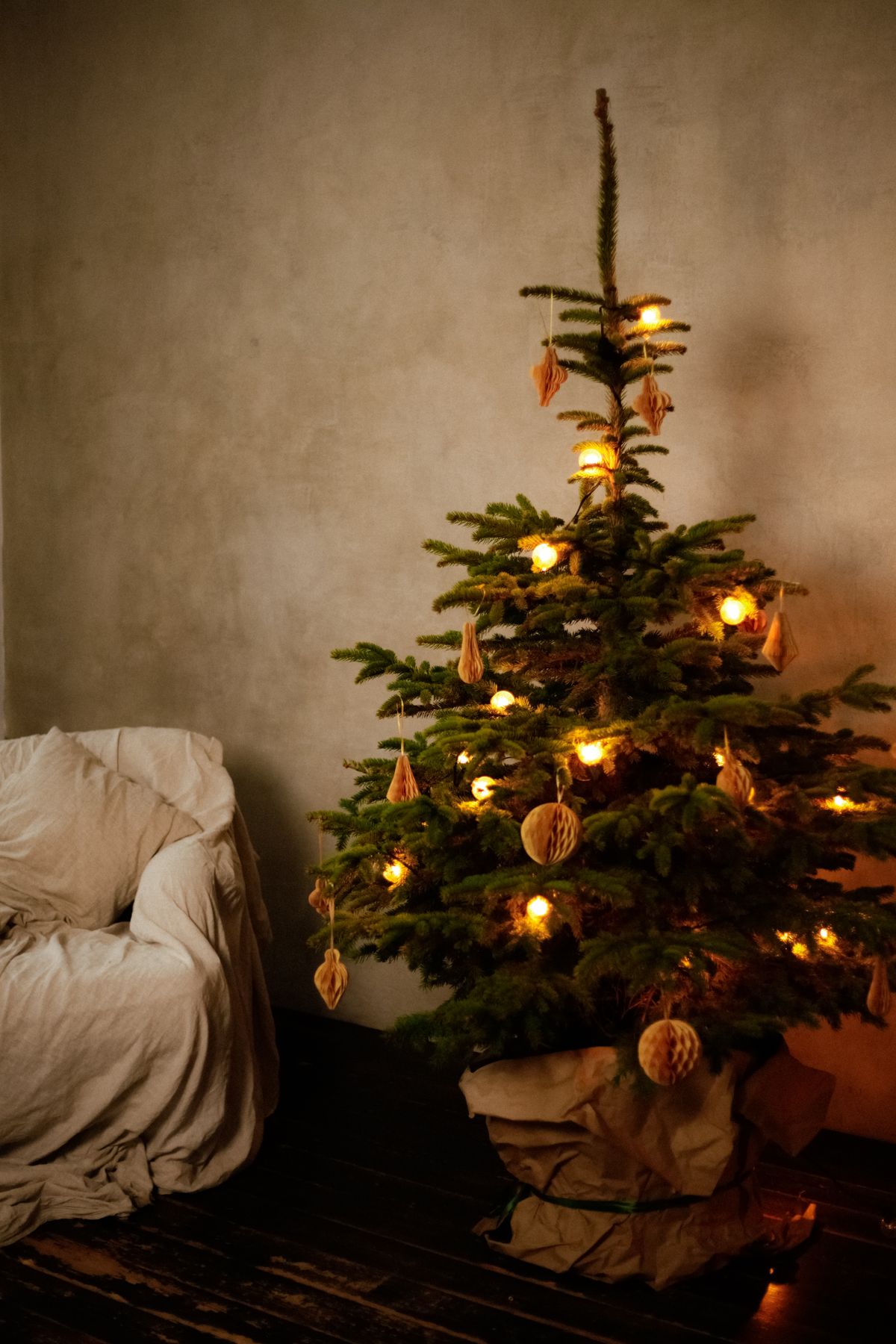
Which Christmas Tree Should You Get? The Nostalgic Edition
This post contains affiliate links, meaning I may receive a small commission if you make a purchase through my links, at no extra cost to you.
Every December, somebody asks which Christmas tree they should get, and every December the answer depends on the Christmas they remember. Not the Christmas in the catalog. The one at Grandma's house, or in the apartment where you spent your first Christmas on your own, or in the living room with the wood paneling and the television that took a minute to warm up.
That is the whole secret to picking a nostalgic tree. You are not really shopping for a tree. You are shopping for an era. The silver aluminum tree belongs to the fifties. The ceramic tree belongs to a kitchen counter in 1972. The flocked tree belongs to a living room with shag carpet and a stereo console. Get the era right and the tree picks itself.
This guide matches nine nostalgic trees to the rooms and the decades they came from, so you can find the one that feels like yours.
Key Takeaways
- The tree you want is the tree from the era you miss — match the tree to the decade, not to the catalog.
- The 1950s aluminum tree needs a color wheel, never string lights, and the photo in this post shows a tabletop one, the size most families actually had.
- The classic ceramic tree is the small-space champion: kitchen counters, side tables, apartments, and anywhere a full tree will not fit.
- A flocked tree brings the 1960s and 70s indoors; a big multicolor C7/C9 tree brings the loud, joyful family room.
- Tinsel makes the Grandma's-house look; a sparse Charlie Brown tree makes the quiet, prim one.
- A tabletop tree works anywhere — kitchens, bedrooms, tiny homes — and a real fresh-cut pine is still the old-fashioned way.
- You can mix eras. The cheat sheet at the end matches tree, lights, and topper by decade.
The 1950s Aluminum Tree: Is Silver the Most Mid-Century Christmas of All?
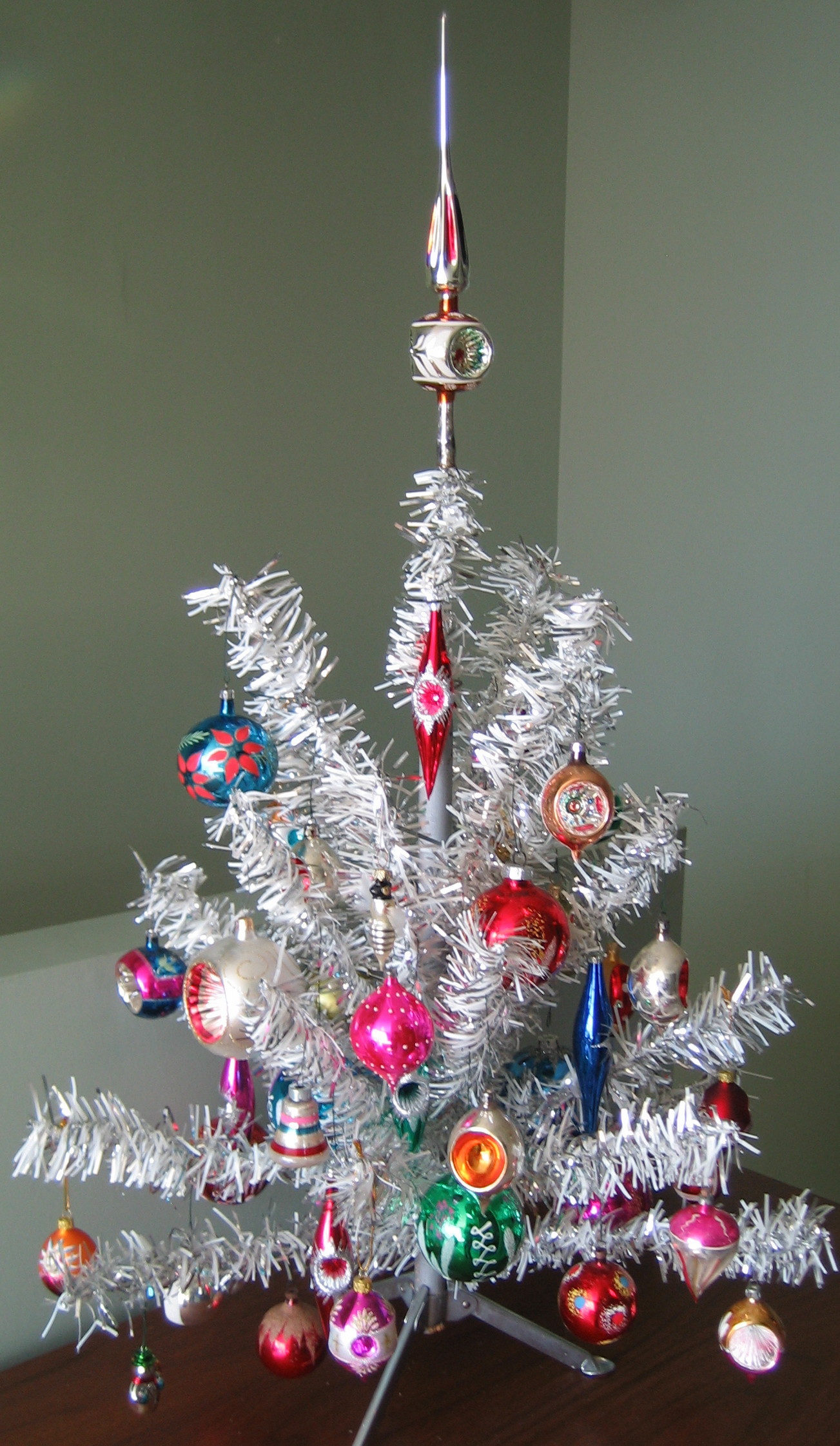
If your room has clean lines, a starburst clock, or a single piece of furniture your grandmother bought new in 1958, the aluminum tree is your tree. It is the most mid-century Christmas decoration ever made: a silver tree that does not pretend to be a real tree at all, shining like tinfoil under the lights.
The aluminum tree had its moment in the late fifties and early sixties, and it came with one strict rule that people still get wrong today: you never, ever put string lights on it. The metal branches conduct electricity, so the tree was lit by a rotating color wheel placed on the floor in front of it, washing the silver branches in slow waves of red, green, blue, and gold. The tree in the photo here is a tabletop aluminum tree, the size most families actually had — small enough for a side table, bright enough to light a whole corner of the room.
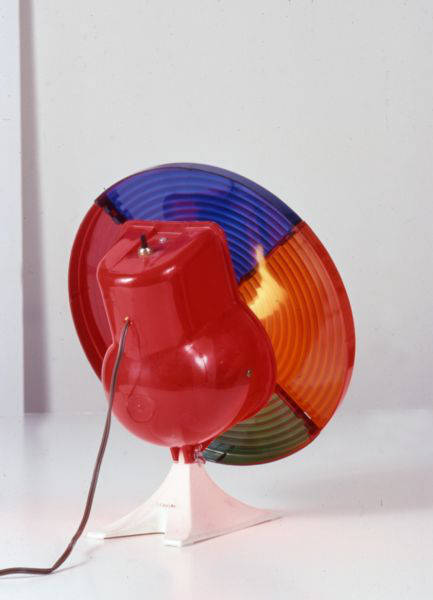
There is a serious footnote to the aluminum tree’s story. The trees were highly flammable, and about 30,000 of them were recalled in 1968. Modern reproductions are made to today’s safety standards, but the old rule still stands: a color wheel for light, never electric lights on the branches.
If the glow of old-fashioned Christmas lighting is what you love most, our vintage Christmas lighting post walks through bubble lights, ceramic trees, and the old-fashioned glow in detail.
The Classic Ceramic Tree: Small Tree, Biggest Memories
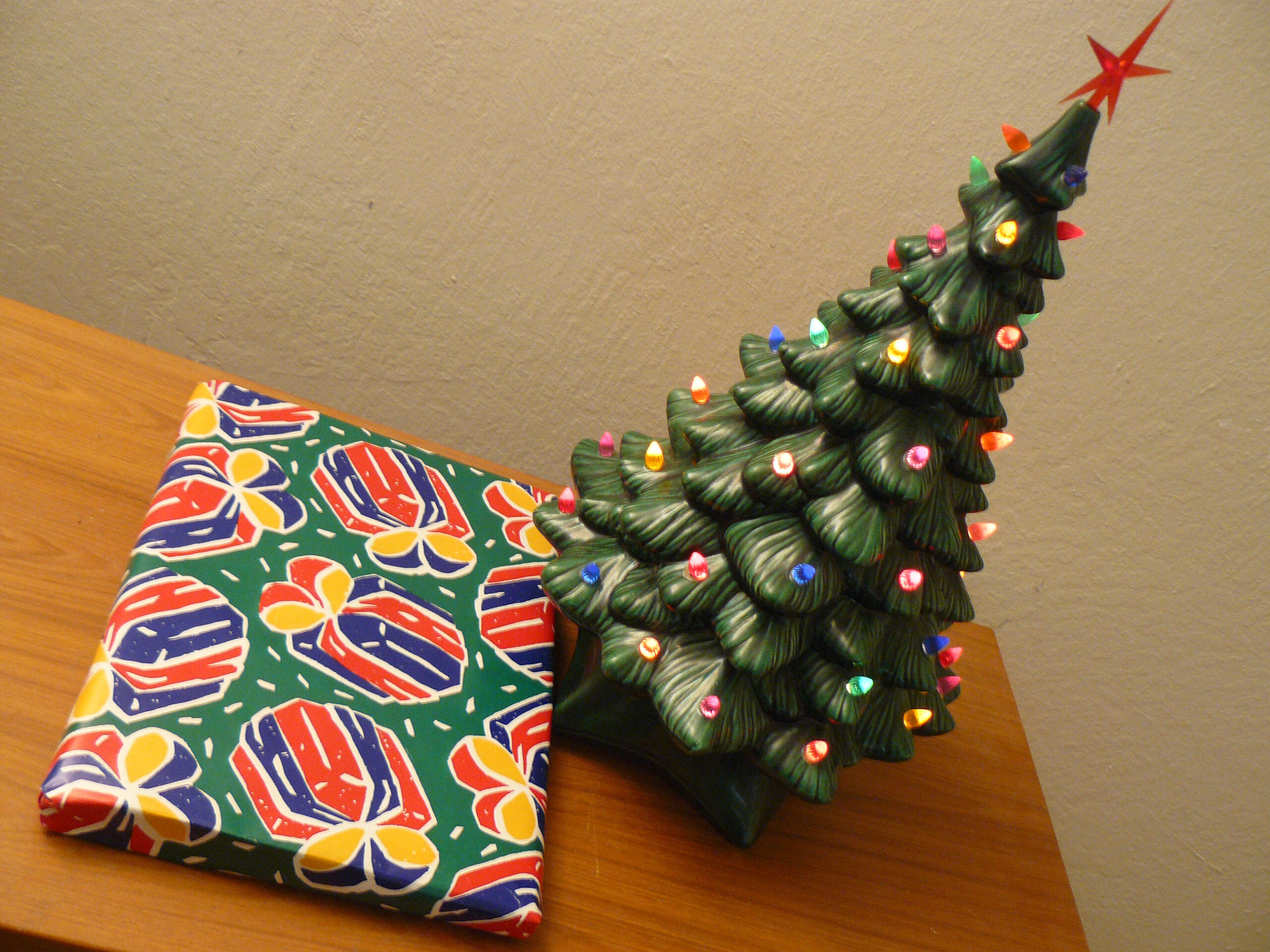
Everybody knows this tree, because almost everybody’s grandmother had one. The classic ceramic tree is a green glazed tree with little multicolored plastic bulbs that glow from inside, usually with a star on top and a round base. It sat on the kitchen counter, or the side table by the good chair, or the windowsill where the neighbors could see it at night.
The tree in this photo is a real one with a real story. Dawn Endico photographed the ceramic tree her mother made for her father’s parents when Dawn was a kid — handmade, not store-bought — and her dad wrote a Christmas message to his own parents on the bottom of it. That is what these trees are: not decorations so much as family objects, made by somebody’s hands, carried from one generation’s house to the next.
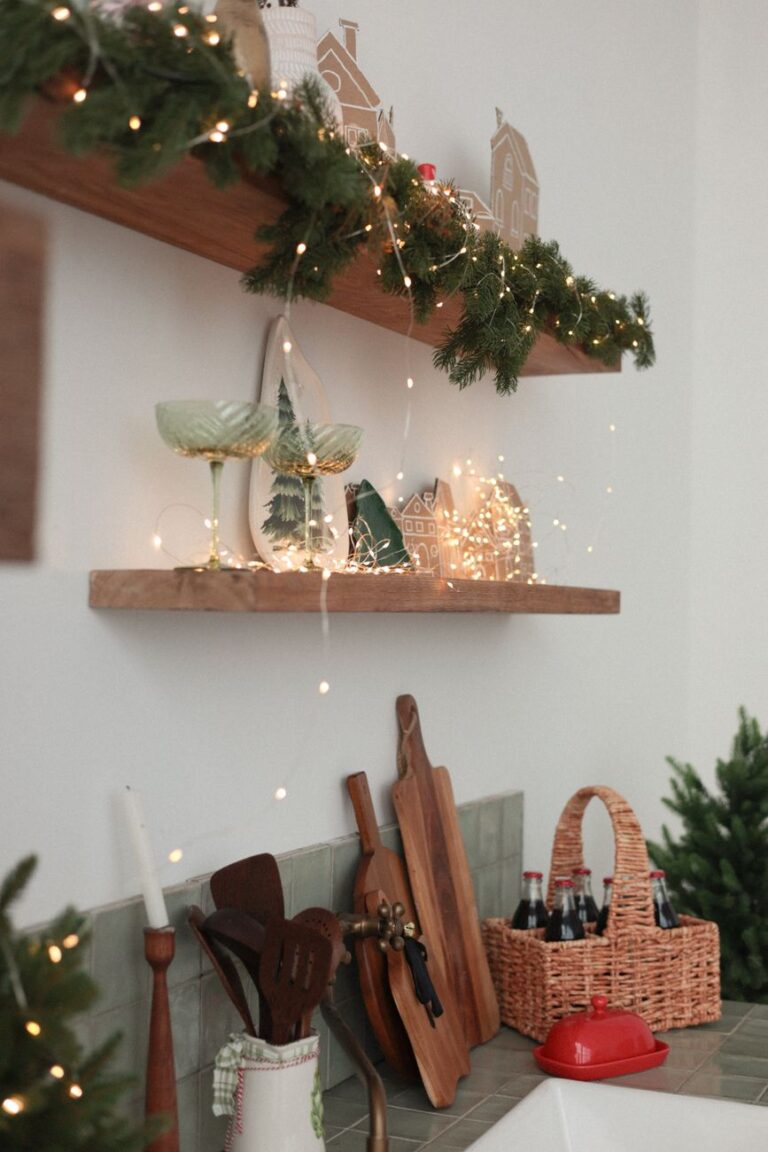
The ceramic tree is also the most practical nostalgic tree there is. No assembly, no storage drama, no pine needles in the carpet. It fits a kitchen counter, a desk, a dorm room, an apartment windowsill — anywhere a full tree cannot go. If your kitchen is where your Christmas memories live, it belongs right there next to the cookie tin.
For more of that kitchen-counter Christmas feeling, Grandma’s Christmas Kitchen is full of it.
The 1960s–70s Flocked Tree: What If It Snowed Indoors?
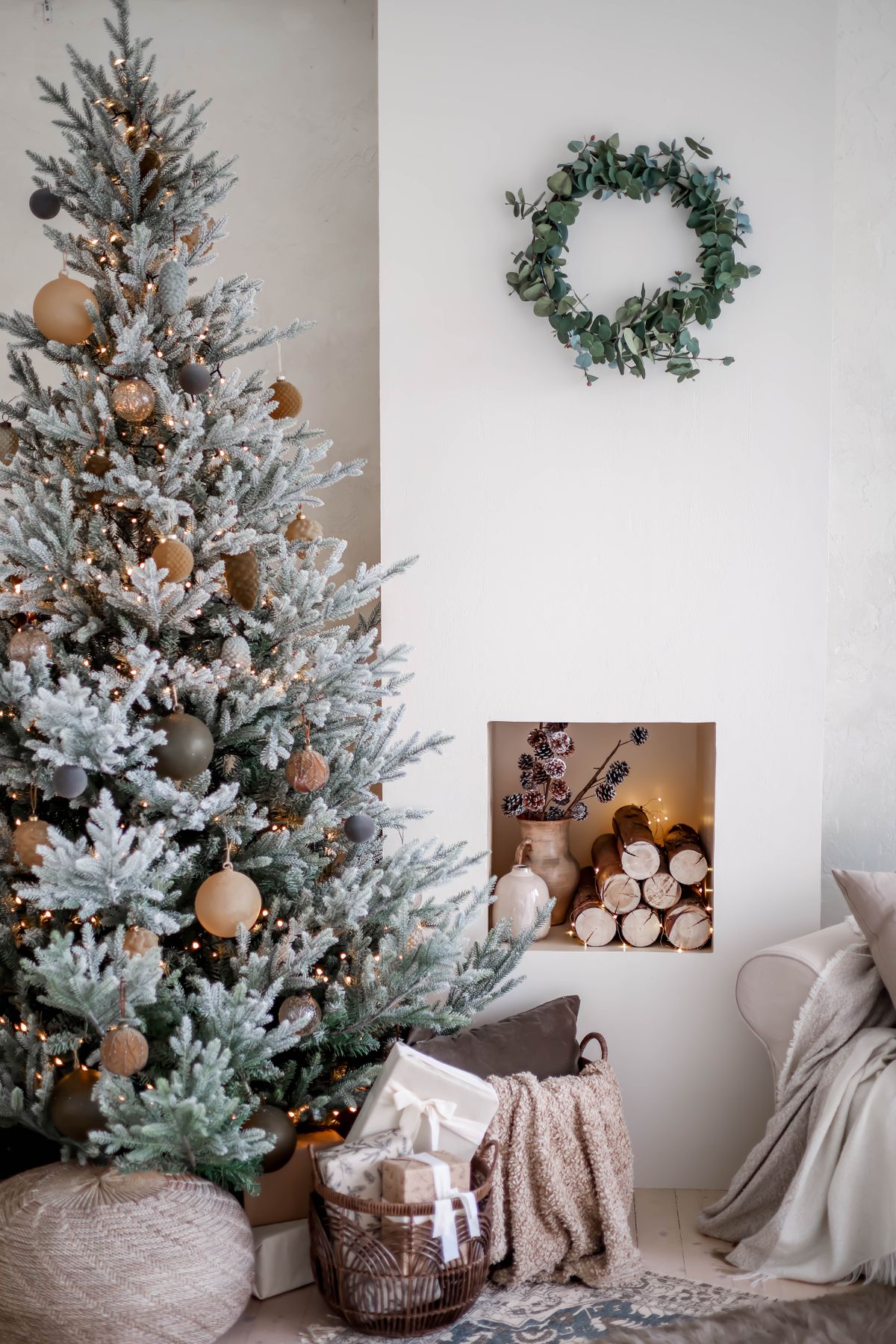
The flocked tree is the one that looks like it snowed in the living room and nobody minded. Its branches are dusted white, as if the tree came in straight from a snowy yard, and it turns even a warm-weather Christmas into a white one.
Flocked trees belong to the sixties and seventies, to wood-paneled rooms and shag carpet and the smell of a fireplace that actually got used. They pair beautifully with warm white lights and simple ornaments — glass balls, a few handmade pieces, nothing too polished. The white flocking does most of the decorating on its own, which is part of the charm: a flocked tree looks finished before you hang a single ornament.
One honest note: flocking sheds a little, especially the first year. Put the tree up, give it a gentle shake outside if you can, and keep a hand vacuum nearby for the first week. After that it settles in and behaves.
The Big Multicolor C7/C9 Tree: The Loud, Joyful Family-Room Tree
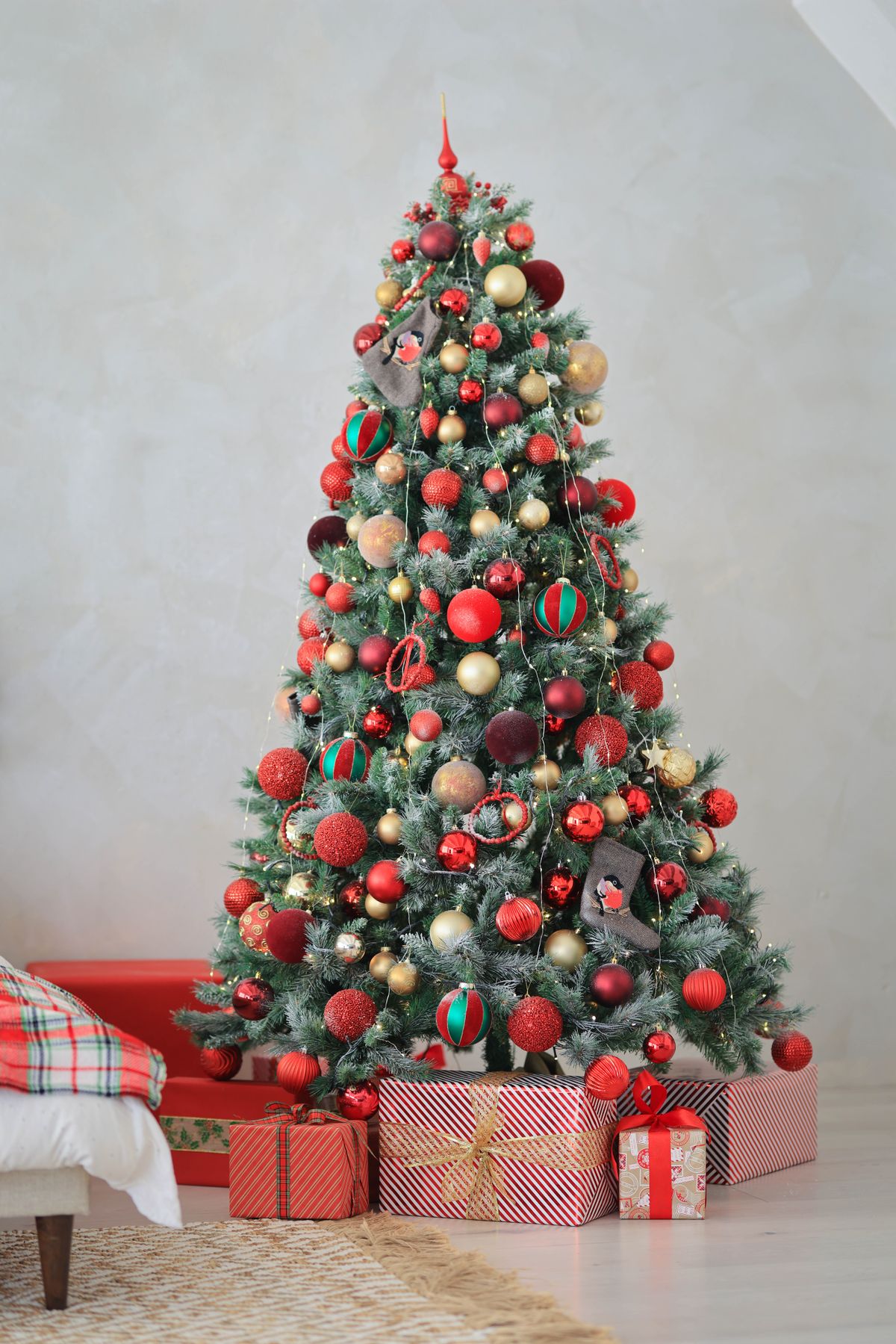
Some trees whisper. This one sings. The big multicolor tree — the one with the fat old-fashioned C7 or C9 bulbs in red, green, gold, and blue — is the tree of noisy family rooms, kids on the floor with wrapping paper everywhere, and a house that smells like a ham in the oven.
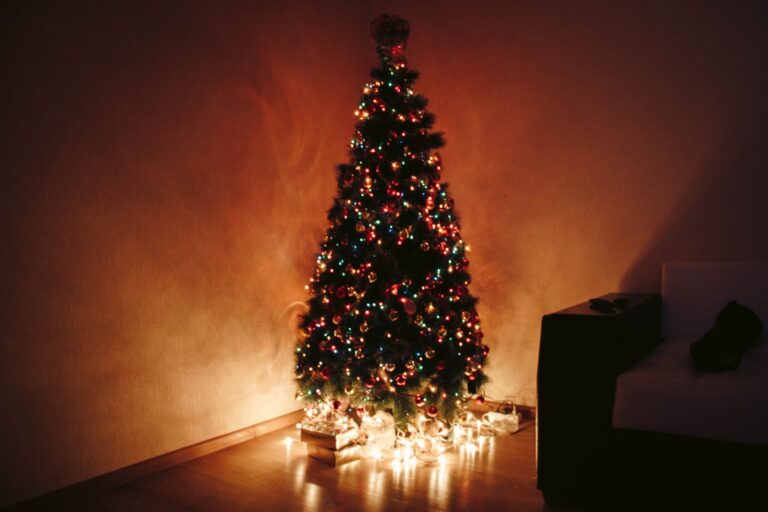
The tree in this photo is dressed in warm red and gold, the classic big-bulb palette, with gifts stacked underneath the way they used to be: right out in the open, where everybody could shake them and guess. If your Christmas memories are loud and bright and crowded, this is your tree. It does not do subtle, and it does not need to.
The big bulbs are the whole point. Those chunky C7 and C9 lights are the ones our grandparents screwed in one by one, and they throw a warm, old-fashioned glow that tiny modern fairy lights cannot imitate.
If bright and colorful is your whole Christmas philosophy, the colorful vintage Christmas post is your next stop.
The Tinsel-Draped Green Tree: How Much Tinsel Is Too Much?
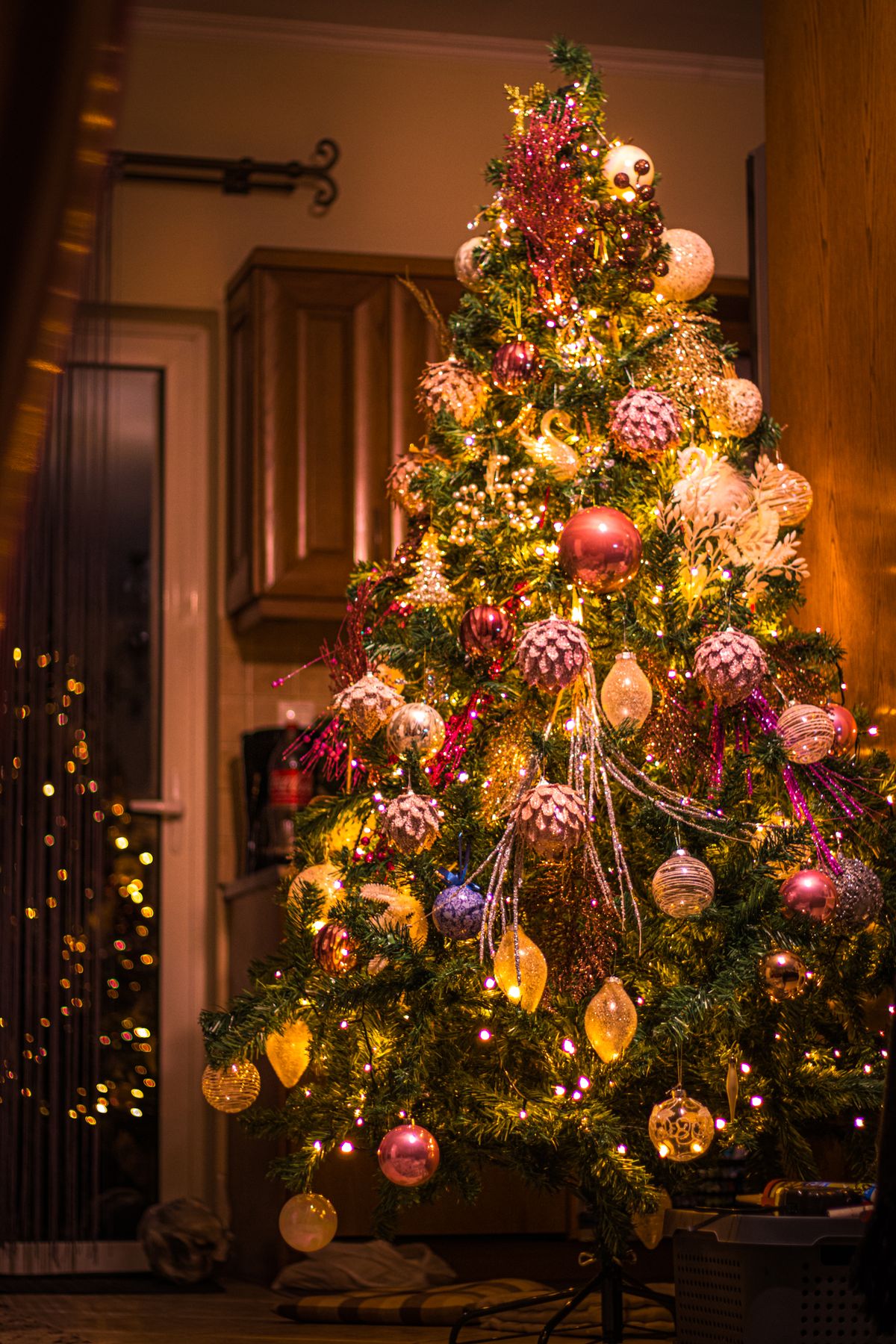
There is no such thing as too much tinsel. That is the whole answer, and every grandmother who ever draped icicles strand by strand already knew it.
The tinsel tree is the full Grandma’s-house look: a green tree, warm lights, ornaments collected over decades, and silver icicles hung one at a time until the tree shimmers every time somebody walks past. The trick the old-timers knew is patience — a handful of icicles tossed on looks like a mess, but icicles placed one by one catch the light like frost.
Lead tinsel is long gone, and good riddance; modern tinsel icicles give you the same shimmer without the worry.
If the whole decades-spanning, attic-full-of-memory version of Christmas is what you are after, start with our nostalgic Christmas tour through the decades.
The Sparse Charlie Brown Tree: Can a Bare Little Tree Be the Most Nostalgic of All?
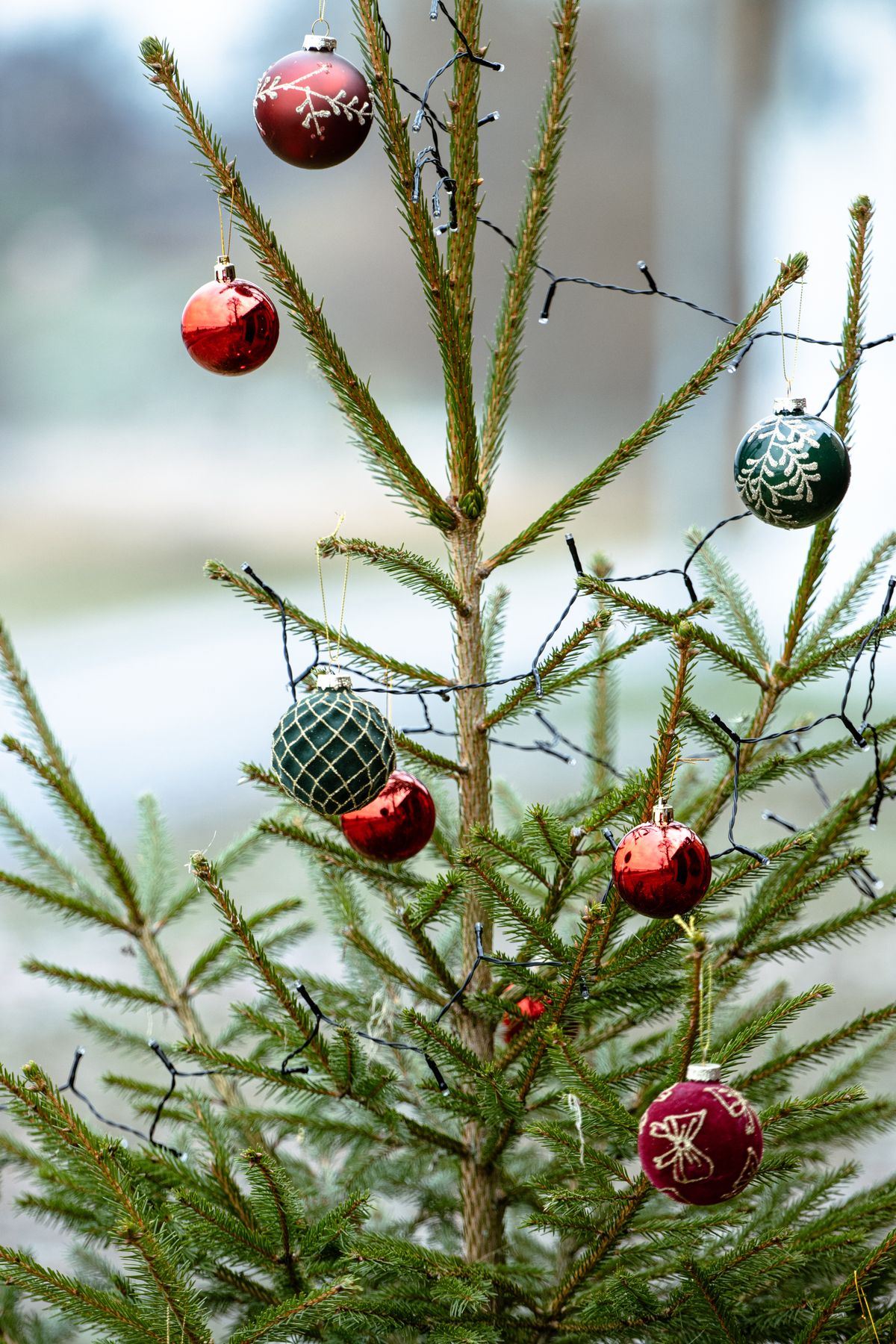
Not every nostalgic tree is full and glorious. Some of the most beloved trees in memory are the scraggly ones: a few thin branches, a handful of ornaments, and more heart than foliage. The Charlie Brown tree — named for the little tree in A Charlie Brown Christmas — is the patron saint of small rooms, quiet houses, and people who love Christmas without needing it to shout.
Feather trees, the Victorian ancestors of the Charlie Brown tree, were made from dyed goose feathers wrapped around wire branches, and they had the same spare, honest look. Both suit vintage-prim rooms, small corners, and anyone whose nostalgia runs toward simplicity rather than spectacle.
The sparse tree asks almost nothing of you: a few favorite ornaments, maybe one strand of lights, and a little stand. It gives back more than it should. There is something about a bare little tree, loved anyway, that feels more like Christmas than the grandest tree in the store window.
The Tabletop Tree: Where Does a Little Tree Belong?
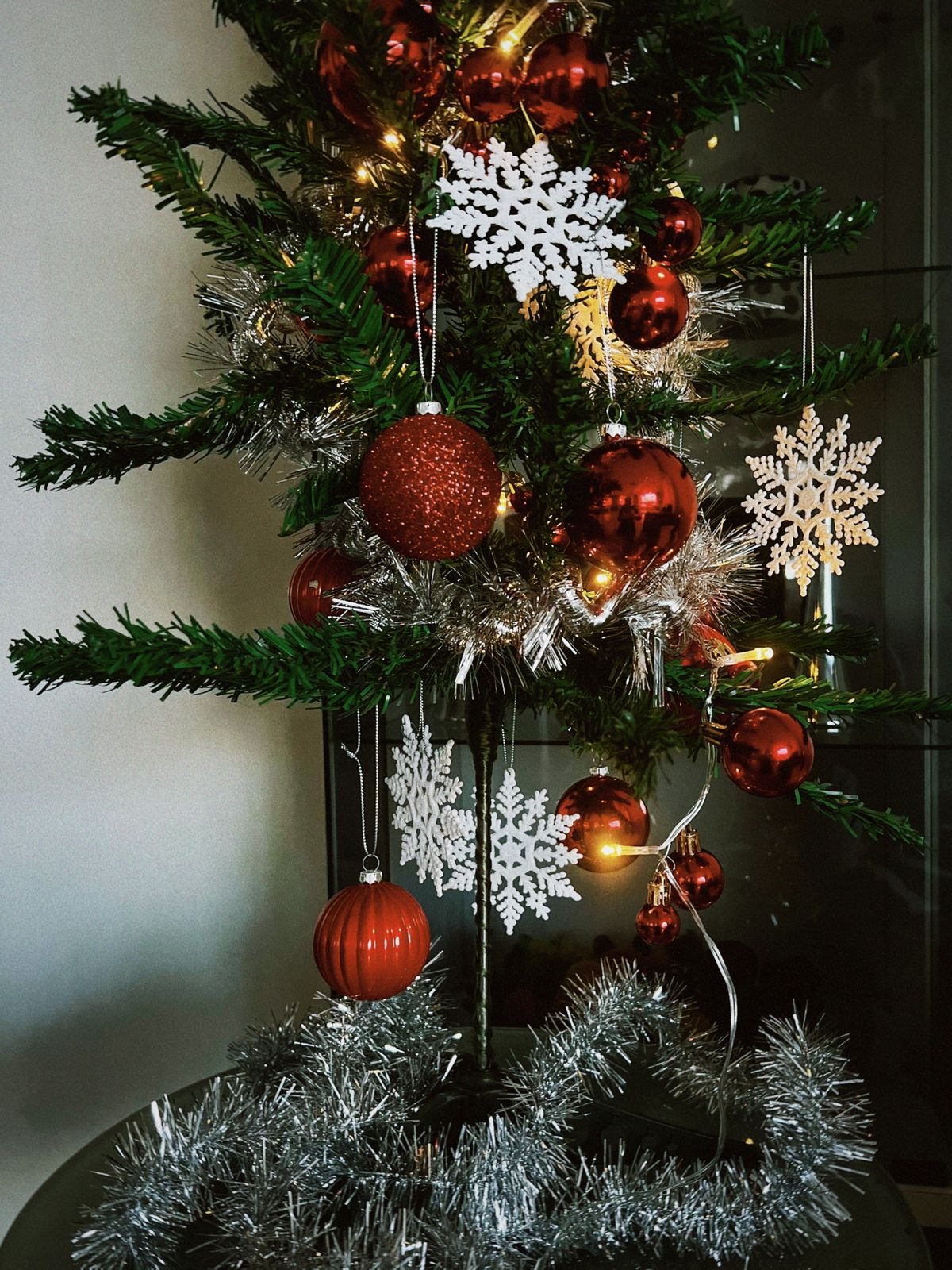
Everywhere. That is the tabletop tree’s whole magic. It belongs in the kitchen where the baking happens, in the bedroom where you wake up on Christmas morning, on the desk where you work through December, in the tiny home where a full tree would eat the whole living room.
Tabletop trees come in every nostalgic style on this list — little green ones, little flocked ones, little aluminum ones that shine like the big silver trees of the fifties.
The small aluminum tabletop tree is a particularly good find: all the mid-century sparkle, none of the floor space.
A tabletop tree is also the easiest way to have more than one Christmas in your house. A big tree in the living room, a little one in the kitchen, a ceramic one on the side table — each room gets its own small celebration. For the kitchen version of that celebration, Grandma’s Christmas Kitchen has the whole room covered.
The Real Fresh-Cut Pine: Is the Old-Fashioned Way Still the Best Way?

Before there were aluminum trees and ceramic trees and flocked trees, there was the real thing: a fresh-cut pine, smelling up the whole house, dropping needles on the carpet, and leaning slightly to the left no matter how carefully you set it in the stand.
The fresh-cut pine is the oldest tree on this list and, for a lot of people, still the best. It suits farmhouse rooms, nostalgic garden homes, and anyone whose Christmas memory starts with the smell of pine the moment you walked in the door. A tree farm visit is half the tradition — picking the tree, tying it to the car, arguing gently about whether it will fit through the door.
If a real tree is not practical for your home — allergies, pets, a landlord with opinions — a good lifelike unlit tree gives you the shape and the ritual without the needles or the watering.
Keep the ornaments vintage and the lights warm, and nobody will know the difference but you.
Mixing Eras: How Do You Layer a Tree, Lights, and Topper by Decade?
Here is the secret the purists will not tell you: you do not have to pick one era. Grandma’s house never did. Her tree had ornaments from every decade she had lived through, lights from two different sets, and a topper older than the tree itself. Mixing eras is the most nostalgic thing you can do.
The trick is to let one era lead and the others visit. A flocked tree with a few ceramic-tree-style ornaments. A green tree with tinsel and one strand of big C7 bulbs. A tabletop aluminum tree beside a real pine in the next room. As long as one thing sets the mood, the rest reads as collected, not confused.
Era-Match Cheat Sheet
| Era you want | Tree | Lights | Topper |
|---|---|---|---|
| 1950s mid-century | Aluminum (tabletop or full) | Color wheel, never string lights | Spike or starburst |
| 1960s–70s cozy | Flocked green tree | Warm white C7 bulbs | Classic star |
| Old-fashioned family room | Big green tree, multicolor | C7/C9 multicolor strands | Angel or star |
| Grandma’s house, full | Green tree, heavy tinsel | Warm white + a few colored | Heirloom angel |
| Vintage-prim / small rooms | Sparse or feather tree | One short warm strand | Small star or bow |
| Kitchen / tiny home | Tabletop or ceramic tree | Built-in glow or tea lights | Star (ceramic) or none |
| Farmhouse / old-fashioned | Real fresh-cut pine | Warm white C9 bulbs | Star or handmade topper |
A star or an angel finishes almost any of these.
Pick the one that looks like it came out of somebody’s attic, and the whole tree will feel like it did too.
Conclusion
The right nostalgic Christmas tree is not the one in the catalog. It is the one that smells like a memory when you look at it. Silver and shining like 1958. Green ceramic glowing on a kitchen counter. Flocked white like a snow day that never melted. Loud and multicolored like a house full of cousins. Bare and beloved like the little tree that was enough.
Pick the era you miss, match the tree to the room you have, and let the ornaments do the rest. The best Christmas tree is the one that makes somebody walk in the door and say, “Oh — this smells like Christmas at Grandma’s.” That is the whole test, and it has never failed yet.
FAQ
Which nostalgic Christmas tree is best for a small apartment?
The classic ceramic tree or a tabletop tree. The ceramic tree needs only a counter or a side table, and a tabletop tree fits a kitchen, a bedroom, or a desk. Both give you the full nostalgic feeling without giving up floor space.
Are aluminum Christmas trees safe?
Vintage aluminum trees were highly flammable, and about 30,000 were recalled in 1968. Modern reproductions are made to today’s safety standards. Whether vintage or new, never put electric string lights on an aluminum tree — the metal branches conduct electricity. Use a rotating color wheel for light, the way it was always meant to be lit.
Can you mix different eras on one tree?
Yes, and it is the most nostalgic thing you can do. Let one era lead — say, a flocked tree for the seventies — and let the other decades visit through ornaments, a strand of big C7 bulbs, or an heirloom topper. The cheat sheet above matches tree, lights, and topper by decade if you want a starting point.
Where do you find real vintage Christmas trees?
Estate sales, thrift stores, and antique malls are the classic hunting grounds, especially for ceramic trees and aluminum trees. Reproductions are widely available too, and for everyday use a good reproduction is often the safer choice — particularly for aluminum trees.
How do I keep a fresh-cut tree fresh through Christmas?
Cut a fresh slice off the trunk before you put it in the stand, keep the water reservoir full every single day, and keep the tree away from heat vents and fireplaces. A fresh tree drinks a surprising amount of water in its first week. If it stops drinking, check that the cut has not sealed over.