Vintage Christmas Lighting: Bubble Lights, Ceramic Trees and Old-Fashioned Glow
This post contains affiliate links, meaning I may receive a small commission if you make a purchase through my links, at no extra cost to you.
There is a particular kind of Christmas light that modern string lights, for all their brightness, never quite reproduce. It is the glow you remember from driving slowly down a street at dusk: a candle in every window, a roofline picked out in big colored bulbs, and inside, a tree lit with bubbles dancing in glass tubes and colors deep enough to feel warm. Vintage Christmas lighting was never about flooding a room with light. It was about small points of warmth, placed deliberately, in a house that was otherwise dim and cozy.
The wonderful news is that you do not need a single fragile, seventy-year-old strand to get that look back. Modern makers have recreated nearly every classic style — bubble lights, ceramic trees, big C7 and C9 bulbs, window candles — with LED technology that runs cool, sips electricity, and will not ask you to trust wiring older than the house it is plugged into. This guide walks through each beloved style, what made it special, and how to use its modern version safely. If you are building the full nostalgic look room by room, pair this guide with my nostalgic Christmas decor ideas for the whole house and a trip into Grandma’s Christmas kitchen, where the lighting rules are the same: low, warm, and welcoming.
Key Takeaways
- The vintage Christmas glow comes from small, warm, widely spaced points of light — big bulbs, candles, and glowing ceramics — not from covering everything in tiny bright LEDs.
- Bubble lights, ceramic Christmas trees, C7 and C9 bulbs, single window candles, and icicle lights are the five signature looks; each now exists in a safe, modern LED reproduction.
- Choose warm reproductions over plugging in genuine vintage strands. Old wiring, brittle cords, and hot bulbs are a fire risk; admire antiques unplugged or have them professionally rewired.
- C7 bulbs suit trees, garlands, and indoor displays; the larger C9 bulbs are the classic choice for rooflines and outdoor paths.
- One candle in each front window is the cheapest, oldest, and most nostalgic lighting move of all — flameless timers make it effortless.
- Layer in this order: tree first, then windows, then mantel or tabletop ceramics, then outdoors. Stop before it looks bright; vintage glow should feel like candlelight, not daylight.
Why Does Vintage Christmas Lighting Look So Different?
It looks different because it was different — in color, in scale, and in intention. Old Christmas lights used larger bulbs with painted or colored glass, spaced farther apart, and they burned with a softer, warmer light than the pinpoint LEDs most of us grew up replacing them with. Each bulb was its own little lantern.
Color you could feel
Classic Christmas color was saturated: a true deep red, a green like bottle glass, a blue so dark it glowed almost purple, and a warm amber-gold. Modern reproductions worth buying are the ones that chase that same saturated, slightly moody palette instead of the icy blue-white that makes a tree look like a refrigerator case. When you shop, “warm” and “retro” in the product name are your friends; anything described as “daylight” will break the spell.
Fewer lights, placed with purpose
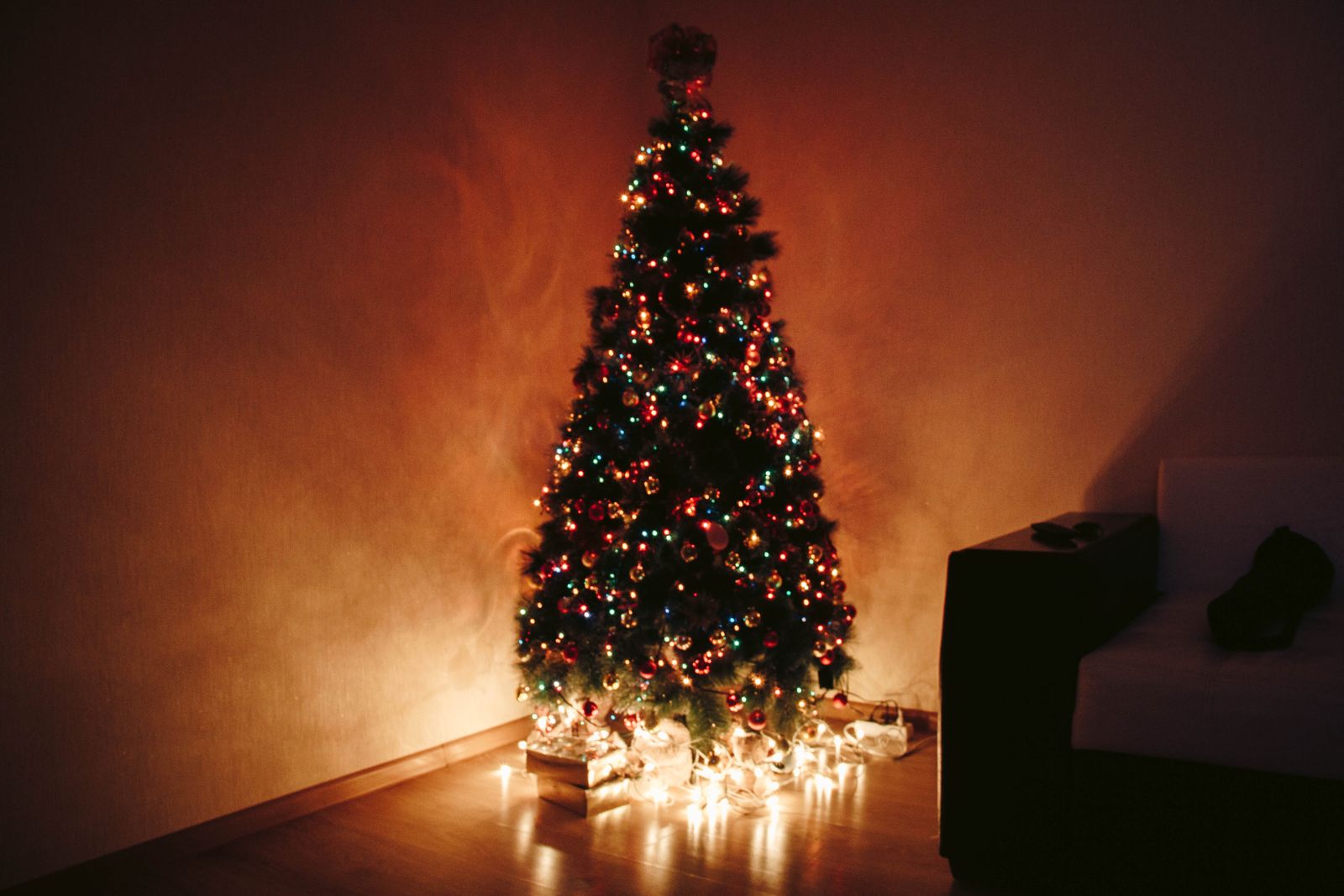
A vintage tree might carry a few dozen bulbs where a modern one carries hundreds of tiny diodes. That restraint is the whole aesthetic. Your eye travels from glow to glow, and the dark green branches between them are part of the beauty. Decorate accordingly: you are placing lanterns, not stringing a net.
Year-round, this same love of warm, characterful light is what my guide to nostalgic lighting pieces for a nostalgiacore room is all about — Christmas simply turns the volume of that feeling up for one month a year.
Bubble Lights: The Ones Everybody Watched
If vintage Christmas lighting has a mascot, it is the bubble light. A small glass tube of colored liquid sits above a warm bulb; when the bulb heats the liquid, a stream of bubbles rises through the tube in a cheerful, endless fizz. They first appeared in the 1940s and spent the next several decades hypnotizing children who were supposed to be in bed.
Why the bubbles only start once they warm up
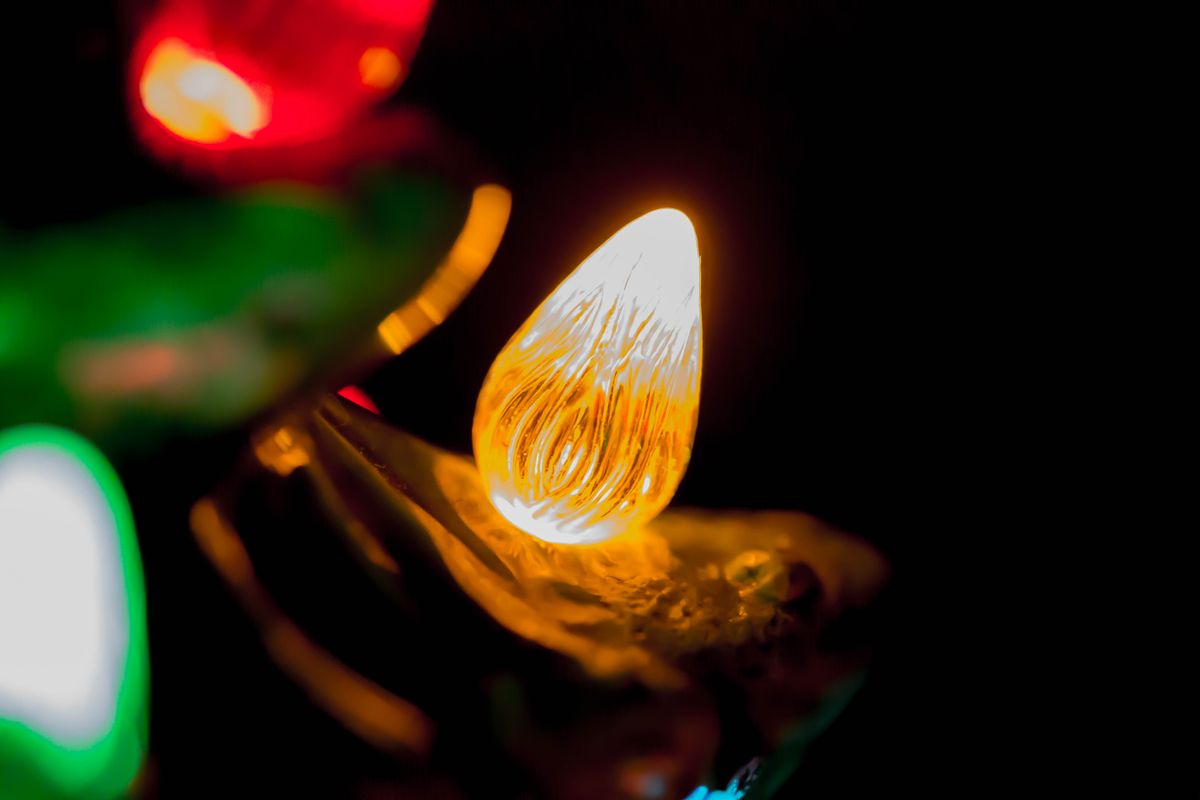
Bubble lights need a minute. The bubbling is driven by heat, so a strand always looks still and sleepy when you first plug it in, then wakes up tube by tube as the liquid warms. On modern LED-based reproductions, the effect is recreated with a small heating element or a bubbling mechanism designed to mimic it. Tubes like to stand upright; a bubble light tipped on its side may bubble lazily or not at all, which is why so many people remember a grandparent patiently straightening them.
Are bubble lights safe to use today?
Modern reproductions, yes — with the usual common sense. Buy new bubble-light strands made for today’s safety standards, keep them on the tree rather than near paper or dried greenery, and turn them off when you leave the house or go to sleep, as you should with any decorative light. Genuine vintage strands are a different story: the bubbling liquid in old tubes and the age of the cords make them display pieces, not daily drivers. If a strand looks brittle, cracked, or patched with tape, its working days are done.
Vintage-style LED bubble light strand for Christmas tree
Styling them so they read as vintage
Bubble lights want to be seen individually, so give them a tree with room between branches — real or artificial — and space the strand so each tube stands on its own little stage. They pair beautifully with simple glass ball ornaments and tinsel, the way they were styled the first time around. Minimalist trees need not apply; this is not that tree.
Ceramic Christmas Trees: The Tabletop Icon
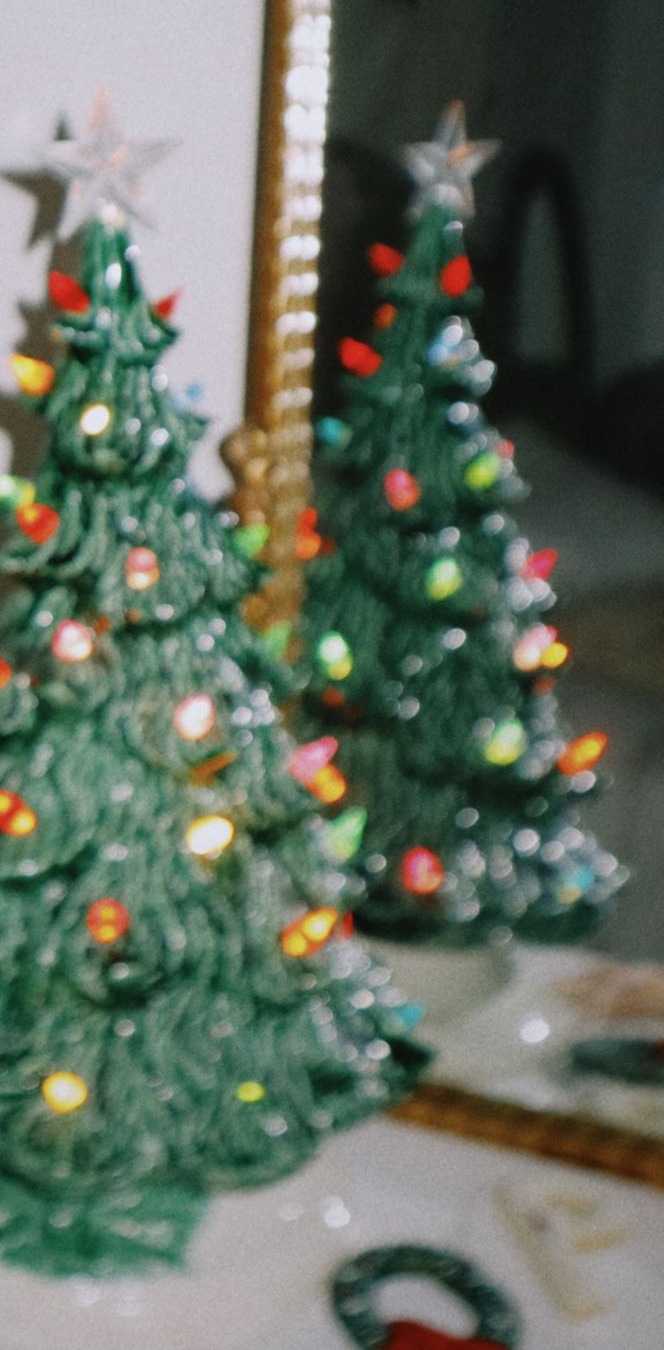
Ask a room of people to name a vintage Christmas decoration and the ceramic tree wins in a walk. A glossy green (or snowy white, or occasionally pink) ceramic tree, studded with tiny multicolored plastic bulbs and a star on top, lit from inside by a single bulb in the base. Through the middle of the last century, they were made by the thousands in ceramics classes and craft kits, and nearly every home had one on a sideboard, a TV top, or a kitchen counter.
Why the ceramic tree never really left
It does the entire job of a Christmas tree in fourteen inches. It needs no watering, no ornament boxes, no untangling. You set it down, plug it in (or switch on the battery base), and the room is decorated. For small spaces, for a kitchen counter, for the top of a piano — the ceramic tree is nostalgic decor at its most efficient. The kitchen, especially, loves one; see how a small glowing tree fits right into the tins-and-towels world of Grandma’s Christmas kitchen.
Choosing a modern ceramic tree
Today’s versions are lit with LEDs, often battery-powered with timers, which frees them from outlet geography entirely. Look for the classic details: individually placed colored bulbs rather than a printed pattern, a star topper, and a glaze with some depth to it. Sizes run from mini trees for a desk to large statement pieces; one medium tree, placed where it reflects a little — near a mirror, a window, or glossy ornaments — glows well above its weight.
Ceramic Christmas tree with multicolor lights and star topper
Where to put one (or three)
One tree is a classic. A small grouping — two or three sizes together on a mantel or buffet, the way collectors display them — is a whole moment. Keep the rest of the surface simple: a runner, a few candles, and nothing that competes. And if you own a genuine handmade vintage ceramic tree, use it proudly — just give its base a modern LED replacement bulb, the wise upgrade for any vintage piece.
Replacement bulbs for ceramic Christmas trees
C7 and C9 Bulbs: What’s the Difference, and Which Do You Need?
The big colored bulbs strung along rooflines and wrapped around porch railings in every memory of a 1960s Christmas were C7s and C9s — “C” for the candle-like flame shape, with the number describing the bulb’s width. They are the backbone of the vintage look, and choosing between them is mostly about scale.
C7: the indoor and tree bulb
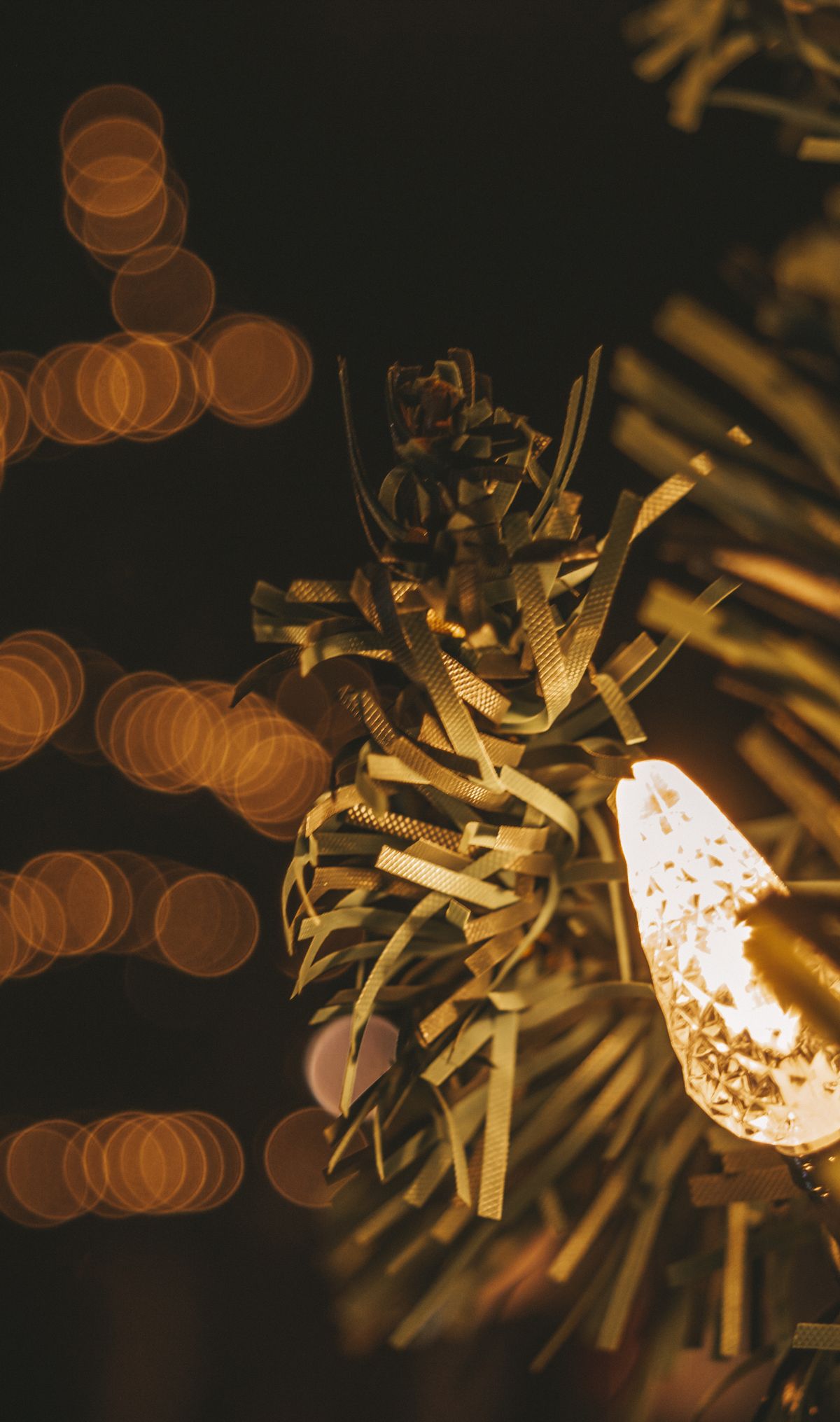
C7 is the smaller of the two. It is the classic size for Christmas trees, wreaths, garlands, and indoor displays — big enough to read as an individual glowing bulb, small enough to sit gracefully on a branch. On a tree, C7s deliver exactly that spaced-out, lantern-by-lantern vintage rhythm, and they are the right call for mantels and windows indoors.
C9: the roofline bulb
C9 is the bigger sibling, made to be seen from the street. Rooflines, fence lines, walkways, and big outdoor trees are C9 country — the bulbs are bold enough to hold their own against a whole house. A single C9 strand along a roof edge, in multicolor or in warm red-and-green, is the fastest way to make a house look like the one every car slowed down for.
Vintage-style LED string lights for Christmas tree
C9 vintage-style LED string lights for roofline and outdoor displays
The honest shortcut: buy them in LED
Old C7 and C9 bulbs were incandescent, hot, hungry for electricity, and famous for the one-burned-out-bulb-kills-the-strand ritual. Modern LED versions copy the colored-glass look — the good ones use faceted or opaque colored covers that glow the way painted glass did — while running cool and letting a single failure stay a single failure. This is the category where reproduction beats original by the widest margin, and nobody standing at the curb will ever know the difference.
A Candle in the Window: The Oldest Trick of All
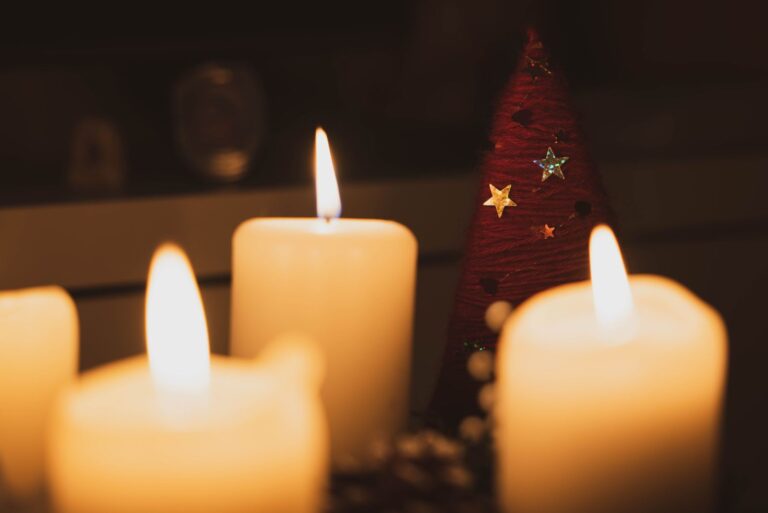
Long before electric strands, there was the single candle in the window — a symbol of welcome and warmth, and the cheapest nostalgic lighting there is. One candle, centered in each front window, transforms a house after dark. It says the house is awake, occupied, and glad of it.
Why one candle beats a display
Restraint, again. A lone candle per window has a rhythm across the front of a house that no inflatable or laser projector can match, and from inside, the windows glow quietly at the edge of every room. If the front of your house has four windows, four candles is the whole project.
Flameless makes it effortless
The modern window candle is an LED taper in a simple holder — brass-tone, black, or white — with a timer or a dusk sensor that turns it on at the same moment every evening and off before you are awake. Battery versions free you from cords entirely. Choose the warmest flame color available, set them all to the same schedule, and your house will greet you at dusk like it means it.
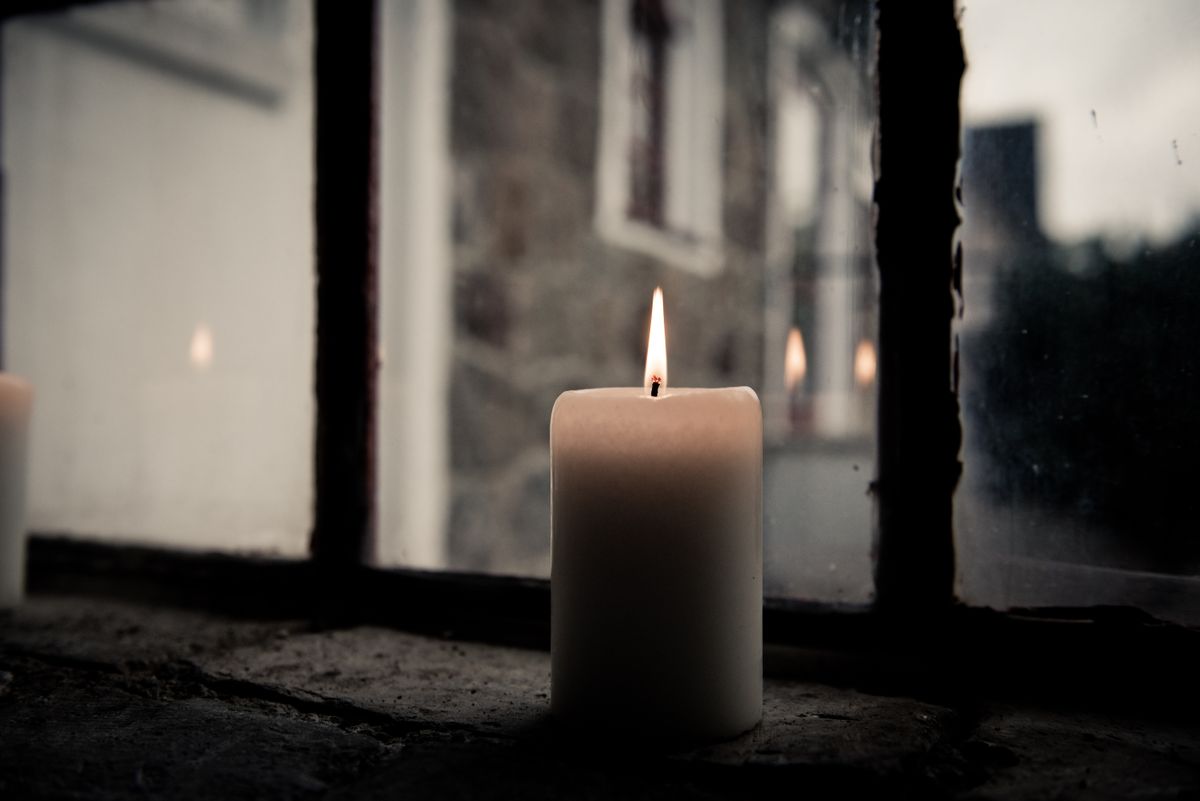
LED window candle lights with timer, set for multiple windows
Tinsel and Icicle Lights: Sparkle, Two Ways
Vintage sparkle came in two forms: tinsel on the tree, doing its shimmering by reflection, and — later — icicle lights on the eaves, doing theirs by bulb. Both survive, and both are better behaved than they used to be.
Tinsel: the original light multiplier
Strand tinsel — those fine metallic threads draped over branches one by one — existed to catch light. A tinsel-draped tree under big C7 bulbs or bubble lights doubles every glow on it. The old lead-based tinsel is long gone (and good riddance); modern versions are plastic or foil and purely decorative. Drape it strand by strand rather than tossing handfuls, keep it off the floor for the vacuum’s sake, and keep it well away from pets, for whom it is a hazard. On a reproduction-bulb tree it is the single most period-correct finishing touch there is.
Icicle lights for the eaves
Icicle lights — short drops of bulbs hanging from a main strand — took over American rooflines in the 1990s, which makes them vintage now by the calendar if not by sentiment. In warm white or classic multicolor, on a timer, they frame a house the way C9s do but with a softer, drippier edge. Mix eras honestly: C9s along the roof peak, icicles along the porch edge, candles in the windows. Houses we grew up in were never decorated from one year’s catalog, and yours should not be either.
Warm white icicle lights for porch and eaves
Mercury Glass and Glow: Ornaments That Earn Their Keep After Dark
Not every vintage glow plugs in. Mercury glass — silvered glass with a soft, antique mirror finish — was made to throw candlelight and bulb-glow around a room, and it still does. Mercury glass ornaments on the tree, a mercury glass vase or candle holder on the mantel, and silvered garland along a shelf all multiply whatever real light you have placed, which is why they belong in a lighting conversation.
The supporting cast: reflectors and glow-in-the-dark touches
Old trees also used foil ornament reflectors behind bulbs to bounce light outward, and mid-century sets included glow-in-the-dark ornaments and icicles that held a faint glow after the lights went out — pure magic to a child sent to bed. Modern glow ornaments are safer and brighter; a handful on the tree gives it a secret second shift after bedtime. Use them sparingly — the memory works because there were only a few.
Mercury glass Christmas ornaments and candle holders
Getting the Look Safely: Modern Reproductions vs. Real Vintage Wiring
This is the section that matters most, so let us be plain about it. The vintage look is worth having. Vintage wiring, mostly, is not.
Should you plug in real vintage Christmas lights?
As a rule, no. Genuine mid-century strands come with cracked insulation, brittle rubber cords, unpolarized plugs, and bulbs that run genuinely hot — the exact ingredients of the house fires that made December famous for the wrong reasons. A strand that has been in an attic for forty years has earned retirement. Hang old bulbs as unplugged ornaments, display a vintage strand in a glass jar as decor, or — if a piece truly matters to you — have it rewired by a professional before it ever meets an outlet again.
The reproduction checklist
Modern vintage-style lights are the answer, and a few habits make them a safe one:
- Buy certified, current products with a recognized safety listing, and buy them new — the reproduction market is the one place “vintage-style” should never mean secondhand electricals.
- LED over incandescent wherever you can: cooler, cheaper to run, and far kinder to trees, garlands, and curtains.
- Timers on everything. Lights that turn themselves off at bedtime cannot be forgotten on. An outdoor-rated timer or smart plug is the hardest-working ten dollars in the whole display.
- Mind the load and the ladder. Follow the strand-count limits printed on the box for anything you connect end-to-end (LEDs allow far more, but the limit still exists), inspect every cord before it goes up, and never staple through a wire.
- Off when you are out or asleep. No exceptions, whatever the technology. The glow is for the awake hours.
Outdoor Christmas light timer or smart plug
With those habits in place, a fully reproduction display is not a compromise — it is the look, the warmth, and the peace of mind, all three at once. And for the other eleven months, the same warm-light philosophy lives in my year-round nostalgic lighting guide.
A Simple Vintage Lighting Plan, Room by Room
If the choices feel like a lot, here is the whole look reduced to a plan you can do in one weekend:
- The tree: one strand of C7 reproductions or bubble lights, simple glass ornaments, tinsel if you are feeling faithful. This is the sun the rest of the room orbits.
- The windows: one flameless candle per front window, all on the same timer. Five minutes of work, the whole street notices.
- The mantel or sideboard: the ceramic tree, mercury glass candle holders, and nothing else that plugs in. Glow by reflection.
- The kitchen: a small ceramic tree or a window candle over the sink — the room from Grandma’s Christmas kitchen deserves its own small light.
- Outside: C9s on the roofline or icicles on the porch, on a timer, and you are done. Resist one more thing. The restraint is the style.
Conclusion
Vintage Christmas lighting endures because it was never really about the lights. It was about a house made warm in small, deliberate places: bubbles rising in a glass tube, a ceramic tree holding court on the sideboard, one candle standing in each window for whoever was coming home. Modern reproductions give us every bit of that back — the saturated color, the big-bulb rhythm, the tabletop glow — without asking us to trust a single old cord. Buy the new versions, put them on timers, keep the rooms dim and the light warm, and the house you remember is the house you are sitting in.
For the rest of the rooms, keep the tour going with my nostalgic Christmas decor ideas and Grandma’s Christmas kitchen — the whole house, glowing the old way, one small light at a time.
FAQ
Are bubble lights safe to use on a real tree?
Modern, newly manufactured bubble lights used as directed are designed for tree use, and LED-based versions run cooler than the originals. Keep any decorative light away from dry needles and paper, water a real tree faithfully so it does not dry out, and turn lights off when you go to bed or leave the house. Genuine vintage bubble-light strands should be retired to display only — their cords and tubes have aged past safe service.
What is the difference between C7 and C9 bulbs?
Size and job. C7 bulbs are the smaller classic bulb, suited to trees, wreaths, garlands, and indoor displays. C9 bulbs are noticeably larger and brighter, made to be read from a distance — rooflines, fences, walkways, and outdoor trees. Many vintage-style homes use both: C7 inside, C9 outside.
Can I still use my family’s old Christmas lights?
The safest answer is to enjoy them unplugged. Decades-old cords can have cracked or brittle insulation even when they look fine, and old incandescent bulbs run hot. If a particular set has real sentimental value, a lighting professional can inspect or rewire it; otherwise, photograph it, display a bulb or two as ornaments, and let modern reproductions of the same style do the actual lighting.
How do I make modern LED lights look vintage?
Choose the right products and the right setting. Look for LED strands that imitate the classic forms — large C7 or C9 shapes with colored, faceted, or opaque covers in saturated retro colors, and warm rather than daylight color temperature. Then light like the era did: fewer bulbs, spaced out, in an otherwise dim room. Half of the vintage look is the darkness around the light.
Why does my ceramic Christmas tree have missing or dim bulbs?
On vintage ceramic trees, the tiny plastic bulbs are removable pegs that simply pop out over the years — replacements are widely available, and one modern LED bulb or battery light kit in the base will even out the glow. On new trees, a dim section usually means a loose bulb peg or a base light that needs fresh batteries. It is the most fixable decoration in the Christmas box.
What is the most nostalgic Christmas light for the least effort?
The single candle in the window, and it is not close. One flameless LED candle per front window, on a timer, costs almost nothing, takes minutes, and recreates the exact sight that meant “home” from the street for generations. If you do only one thing from this entire guide, do that.
Do vintage-style lights use a lot of electricity?
No — the modern LED versions use a small fraction of what the original incandescent C7 and C9 strands drew, and they run cool — the savings and the safety arrive together. A whole house of reproduction vintage lighting on timers typically costs less to run for the season than one old roofline strand once did.