Collecting Vintage Christmas Ornaments: Mercury Glass, Keepsakes & the Stories They Hold
This post contains affiliate links, meaning I may receive a small commission if you make a purchase through my links, at no extra cost to you.
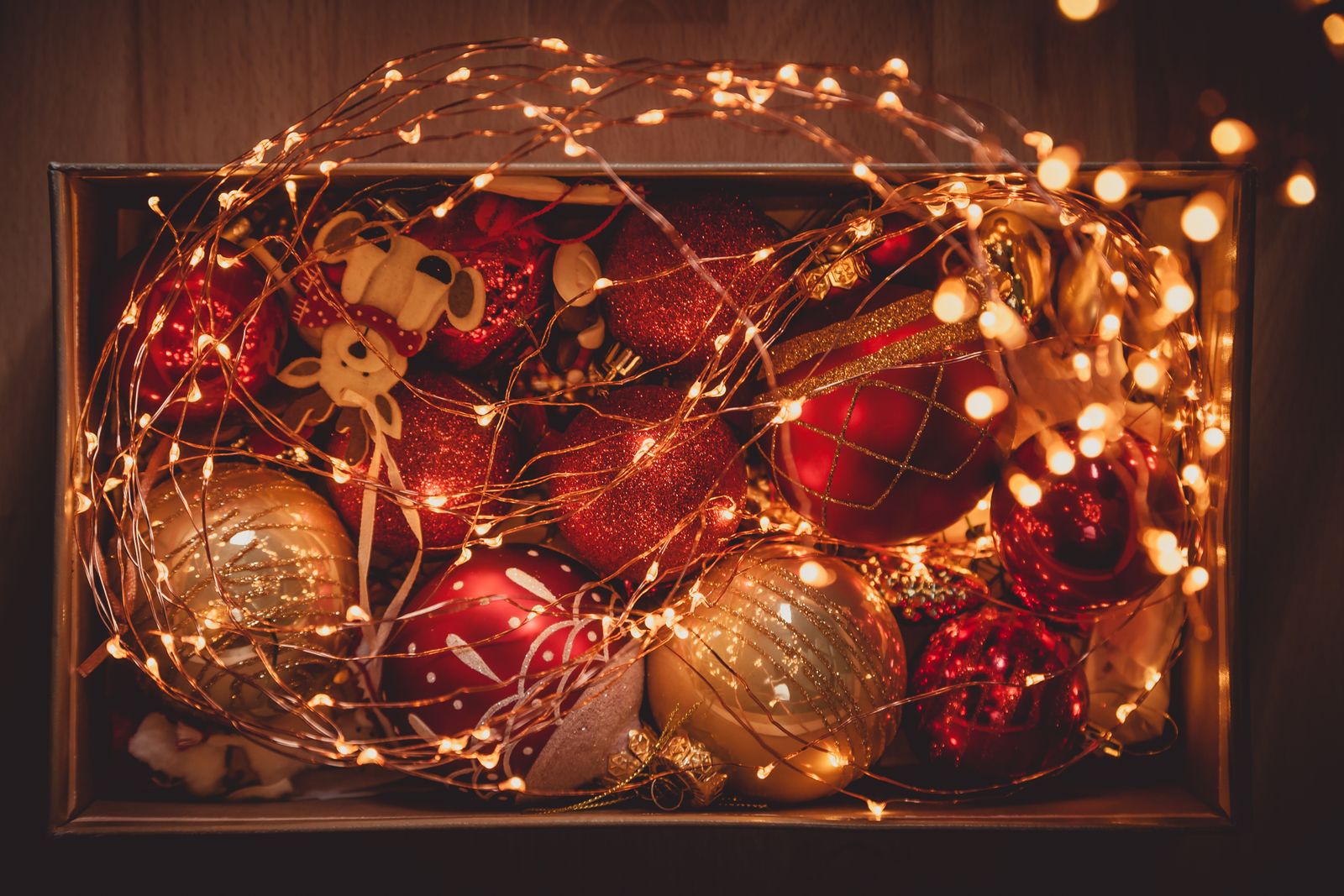
Every family has an ornament box. Not the decorations in general — the box. The one with the tissue paper gone soft from years of folding, and the ornaments inside it that nobody would ever buy now, because you cannot buy what they mean.
Open it and the whole Christmas comes back at once. The glass ball your grandmother hung first every year, always in the same spot. The ornament from the year you were born, with the date written on it in marker that has faded to brown. The popsicle-stick reindeer that looks like nothing and means everything. A box of ornaments is not a box of decorations. It is a family’s museum, and every piece in it has a story.
That is what this post is about. Not pretty ornaments on a tree — everybody writes about that. This is about collecting: the glass balls and the figurals and the dated Keepsakes and the nutcrackers, where the good ones hide, how to spot the real ones, and how to show a collection off beyond the branches. One ornament at a time.
Key Takeaways
- A collection starts with the box you already have — the ornaments with stories are worth more than the ones with price tags.
- Shiny Brite glass balls from the 1940s and 50s are the backbone of most vintage collections; the cap tells you the date.
- Figural ornaments — birds, fruit, Santas — are the ones collectors hunt for, and the shaped ones hold their value best.
- Hallmark Keepsakes are a timeline in ornaments: one a year, dated, and the early ones (Frosty Friends started in 1980) are the keepsakes now.
- The handmade ornaments are the keepers — nobody else has them, and nobody ever will.
- Nutcrackers are the fastest-growing collection this season, and they display better in a group than alone.
- The best ornaments are still found secondhand — thrift stores, estate sales, and flea markets beat the new-ornament aisle.
- A collection does not have to live on the tree — bowls, cloches, garlands, and wreaths show it off all season.
The Ornament Box: What Is Actually in That Box?
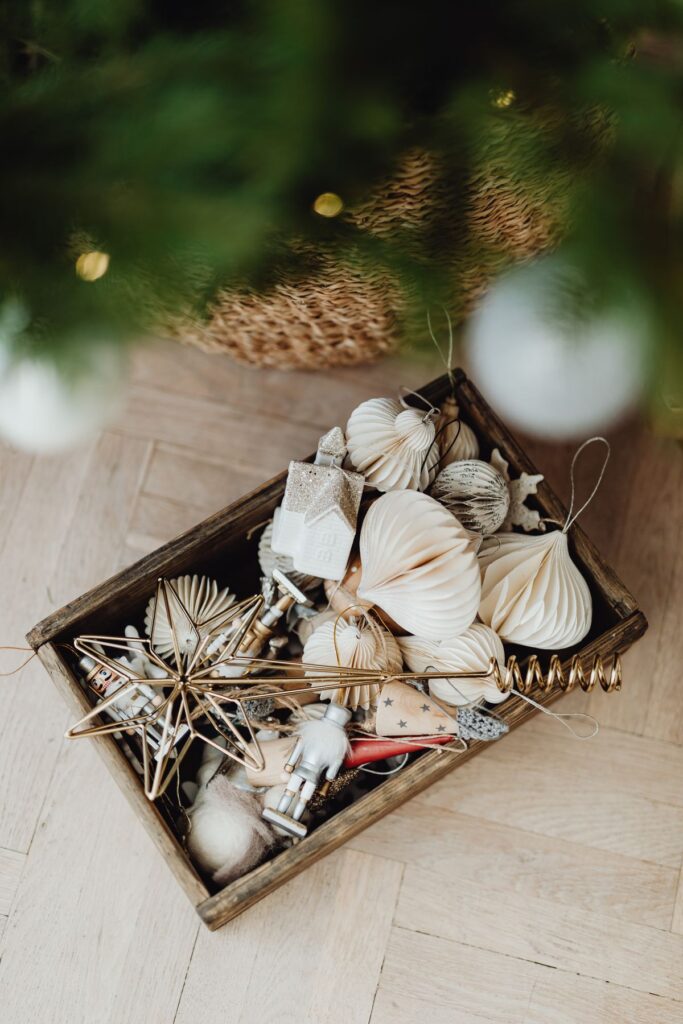
Before the tree, before the lights, before anything else, there is the box. It comes down from the attic or out of the closet the same weekend every year, and opening it is the first real moment of Christmas. The tissue paper. The smell of cardboard and old glitter. The ornament on top that somebody always reaches for first.
Every box tells the same story in a different order. The glass balls from somebody’s first Christmas as a married couple. The ornament a child made in school, lopsided and perfect. The one from the trip, the one from the year someone was born, the one nobody remembers buying but everybody remembers hanging. A collection is not something you set out to build. It is something that builds itself, one December at a time, until one year you open the box and realize you have one.
That is where this post starts — not with buying, but with looking. Open your box before you buy a single new ornament. See what you already have. The personalized ones, with names and dates on them, are the heart of most collections, and they are the ones no store can sell you.
Personalized Christmas ornament
And when the box is open and the tree is waiting, the nostalgic tree guide matches nine trees to the rooms and decades they came from — because the right tree is the one that fits the ornaments you already love.
Shiny Brite & Mercury Glass: How Do You Spot the Real Ones?
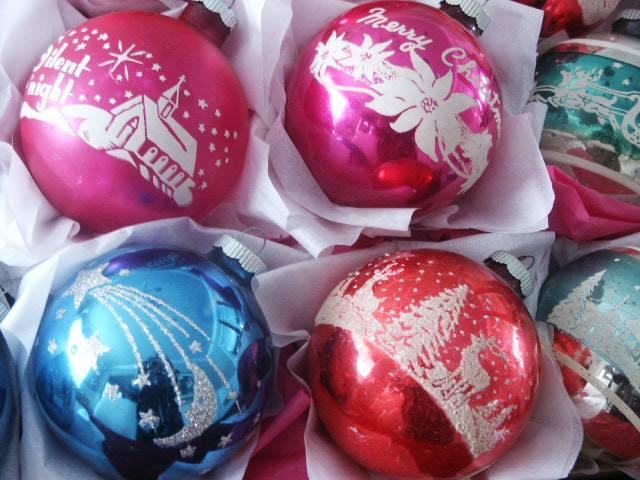
If your family had glass ball ornaments in the 1940s or 50s, they were almost certainly Shiny Brite. Max Eckardt, a German immigrant who had been importing hand-blown glass ornaments since the early 1900s, saw the war coming and knew his supply from Germany would stop. In 1937 he founded the Shiny Brite Company in New York, and Corning Glass adapted the machine it used to make light bulbs to blow clear glass ornament blanks by the thousand. By 1940, Corning was turning out hundreds of thousands a day, and Shiny Brite was on its way to becoming the most popular ornament in America.
The name came from the inside: each ball was lined with silver nitrate so it stayed shiny and bright season after season. The wartime ones are the ones collectors hunt for — from 1942 to 1945, metal and silver nitrate went to the war effort, so the ornaments came with cardboard caps and yarn hangers instead of metal, and the glass was left unsilvered in thin pastel colors. A cardboard cap and a yarn loop means wartime, 1942 to 1945. A stamped metal cap with a spring clip means postwar, 1946 or later, and those are the ones most families still have by the crateful.
Mercury glass is the same idea with an older name — silvered glass, mottled and cloudy with age, the kind that looks like it has been catching candlelight for a hundred years. Real mercury glass and real Shiny Brite are both getting harder to find in good condition, which is why reproductions exist — and a good reproduction scratches the same itch on the tree.
The bright reds and greens of a Shiny Brite collection are the same palette as the colorful vintage Christmas post — the shiny, multicolor Christmas most of us grew up with.
Figural Ornaments: Why Are the Shaped Ones the Ones We Keep?
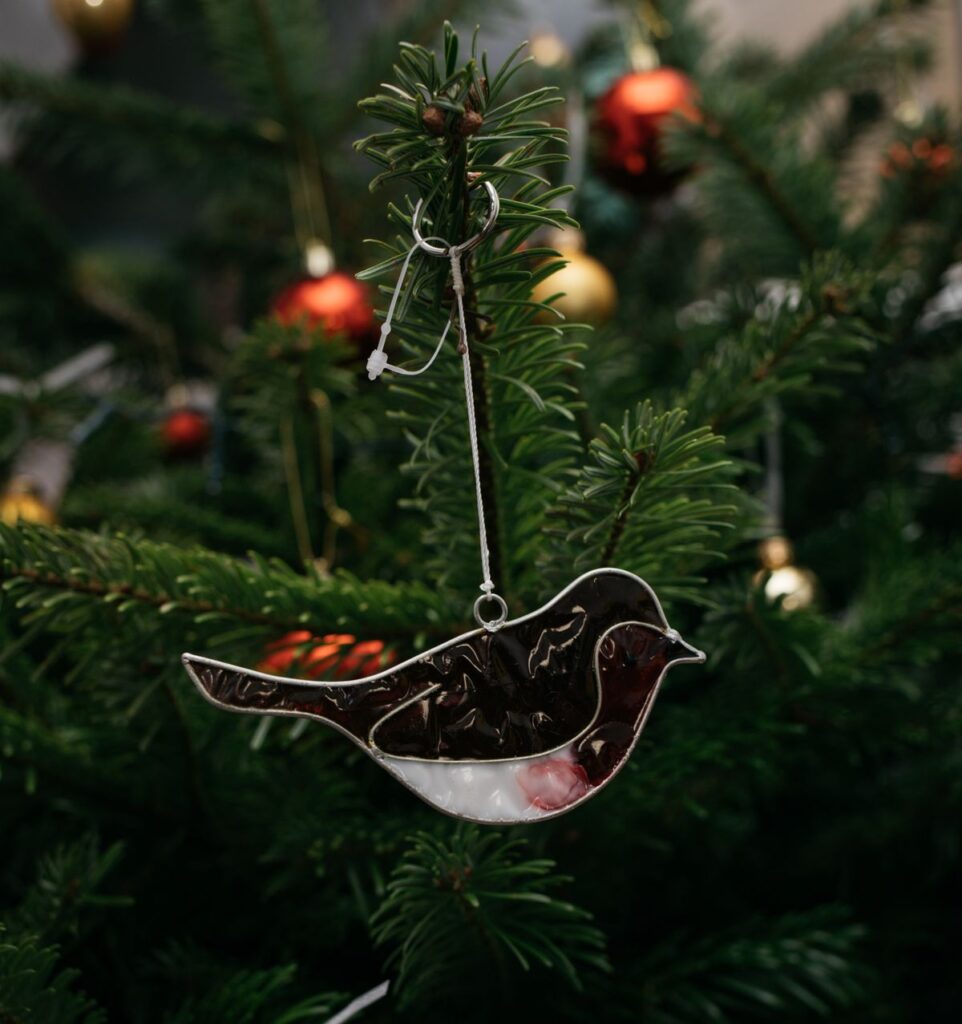
Balls are the backbone of a collection, but figurals are its personality. The blown-glass bird. The pinecone. The cluster of grapes. The Santa with the rosy cheeks. Figural ornaments are the ones shaped like something, and they are the ones people reach for first when the box opens — because a ball is a ball, but a bird is a bird somebody chose.
The oldest figural ornaments came from Lauscha, a small village in Germany where glassblowers had been making blown-glass fruit and nuts since the 1840s, silvering them inside the same way Shiny Brite later would. The shapes tell you the era: fruit and pinecones run old, birds and Santas run mid-century, and the more detailed the painting, the more somebody paid for it at the time.
Figurals are also the ornaments that hold their value best, because they break more often and fewer survive. A figural in good condition — paint intact, no chips, the hook still tight — is worth looking after, and worth paying a little more for when you find one at a sale.
Start with one shape and see where it takes you. Some people collect birds. Some collect Santas. Some collect fruit, because their grandmother’s tree was covered in glass pears and nobody knows why. A collection with a theme is a collection with a story, and the story is the point.
Hallmark Keepsakes: What Does a Dated Ornament Remember?
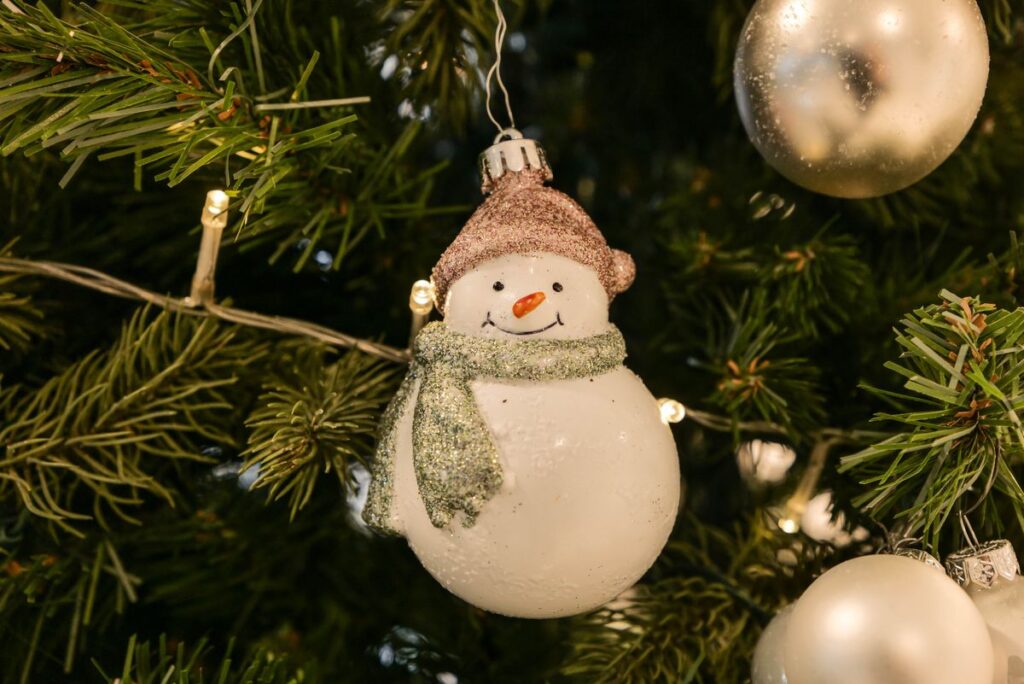
There is an ornament on millions of trees that says the year on it. That is the Hallmark Keepsake idea, and it is the simplest collection there is: one ornament a year, dated, hung in order, until the tree carries a timeline of a family’s Christmases. The year you got married. The year the baby came. The year of the new house, the new job, the dog.
The tradition goes back decades, and the early ones are the keepsakes now. Frosty Friends, the snowman series, started in 1980, and a complete run of early Frosty Friends is a collection in its own right. The dated ones matter because the date is the memory — nobody needs an ornament that says 1987 unless 1987 meant something.
Keepsakes are also the easiest collection to start, because the current year’s ornament is always available — and the easiest to keep going, because next year’s is a gift idea that buys itself.
Each dated ornament marks a year, and the years stack up into decades — the same decades the nostalgic Christmas post walks through, one era at a time.
Handmade Ornaments: Why Are the Ugly Ones the Keepers?
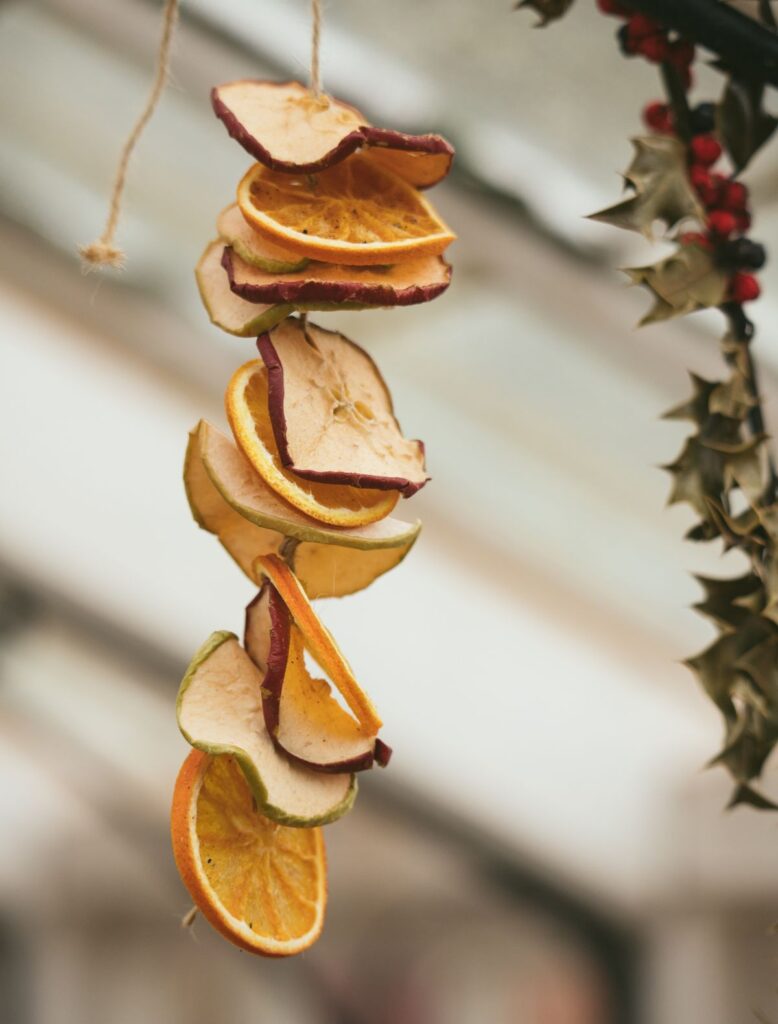
Every ornament box has one that looks like nothing. The salt-dough star with the lopsided points. The popsicle-stick reindeer with one eye bigger than the other. The popcorn string that shed all over the carpet. These are the handmade ornaments, and they are the ones nobody would ever sell — because nobody else has them, and nobody ever will.
Handmade ornaments are the only ones that cannot be collected, only made. Salt dough and a cookie cutter. Dried orange slices on a string. A pinecone with glitter and a ribbon, made at the kitchen table while something baked in the oven. They cost nothing and they are the first ornaments to go on the tree and the last to come off.
If you want to start the handmade tradition, clear fillable ornaments are the easiest blank canvas — fill them with dried flowers, tiny pinecones, glitter, or a photo, and the ornament is yours in a way no store-bought ball ever is.
And if your box already has a handmade ornament in it, hang it where you can see it. The ugly ones are the keepers. They always were.
Nutcracker Collections: Why Is Everyone Collecting Nutcrackers Now?
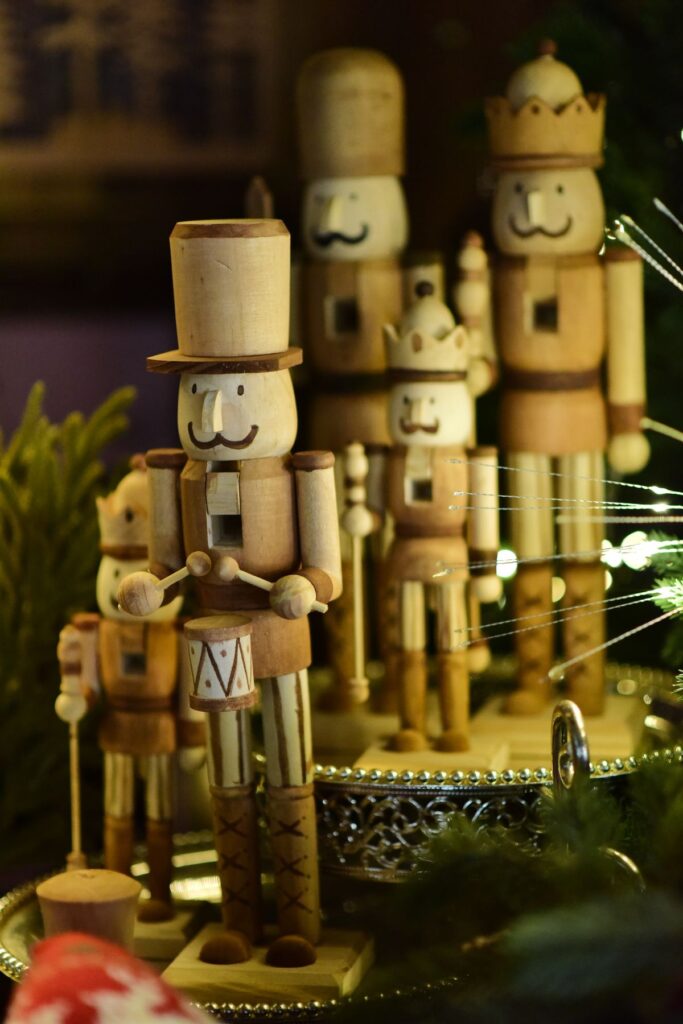
Nutcrackers are having a moment. The wooden soldiers that used to stand one or two to a mantel are now collected by the dozen, lined up on shelves and sideboards and staircases, and they are one of the fastest-growing Christmas searches of the season. Part of it is the look — tall, colorful, instantly Christmas. Part of it is the collecting itself: nutcrackers come in every size and trade and uniform, and a collection grows one gift at a time.
The tradition is older than the trend. Wooden nutcrackers come from Germany, where they were carved as folk figures long before they were Christmas decorations, and the classic soldier — tall hat, white beard, bright jacket — is the one most collections start with. From there it spreads: a drummer, a king, a chef, a Santa, whatever catches your eye at the craft fair.
Nutcrackers display better in a group than alone — three or five together, different heights, on a mantel or a sideboard, read as a collection where one alone reads as a decoration. And unlike glass balls, they do not break when the cat gets involved.
Start with one good one rather than a cheap set. A solid wooden nutcracker, painted by hand, will outlast a dozen pressed-wood imitations — and it is the one you will still be putting out in twenty years.
The Thrifted Hunt: Where Do the Good Ones Hide?
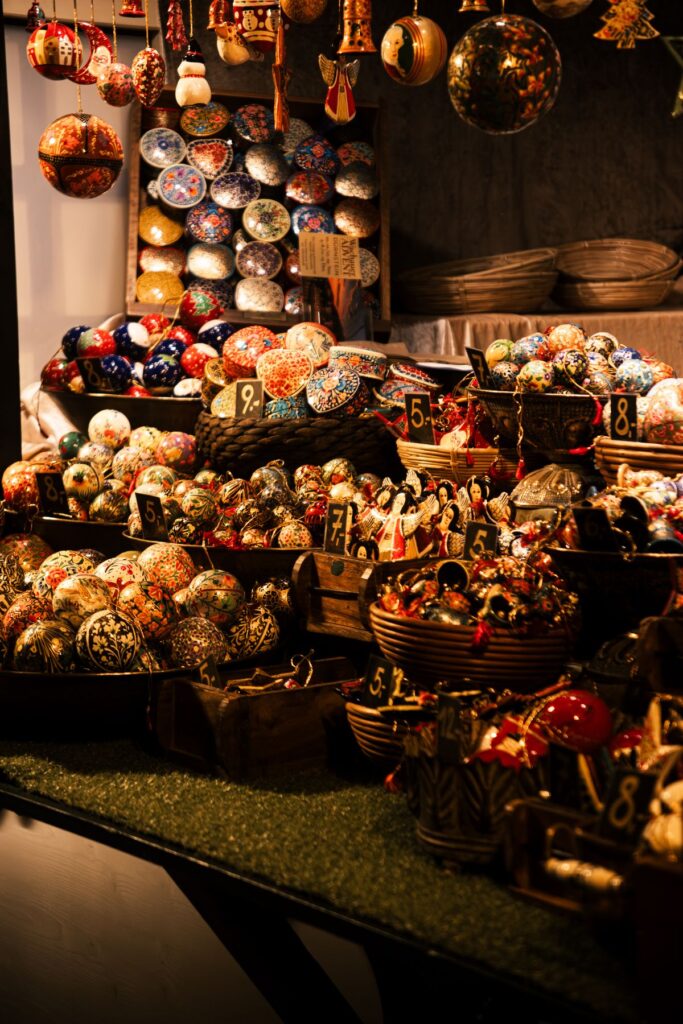
Here is the secret every ornament collector knows: the best ornaments are not in the ornament aisle. They are in the thrift store, the estate sale, the flea market, the church rummage table — in somebody else’s box, waiting for a second Christmas. A ThredUp survey this fall found that 62% of Americans plan to buy secondhand this season, and vintage ornaments are one of the things they are hunting for. The hunt is half the hobby.
What to look for: glass balls with the silvering still bright inside, figurals with their paint intact, anything in its original box. What to pay: a few dollars for a single ball, more for a boxed set, and whatever a wartime Shiny Brite is worth to you when you find one with its cardboard cap. What to walk past: cracked glass, flaking paint, and anything described as “vintage-style” at a vintage price.
Estate sales are the best hunting ground, because an estate sale is somebody’s whole ornament box at once — the collection built over forty Christmases, priced to move in a weekend. Go early, bring cash, and check the cap on every glass ball before you buy it.
And when you find one, remember where you found it. The story of the hunt becomes part of the ornament’s story, and next year when you hang it, you will tell it again.
Displaying Beyond the Tree: What Do You Do With Ornaments That Never See a Branch?
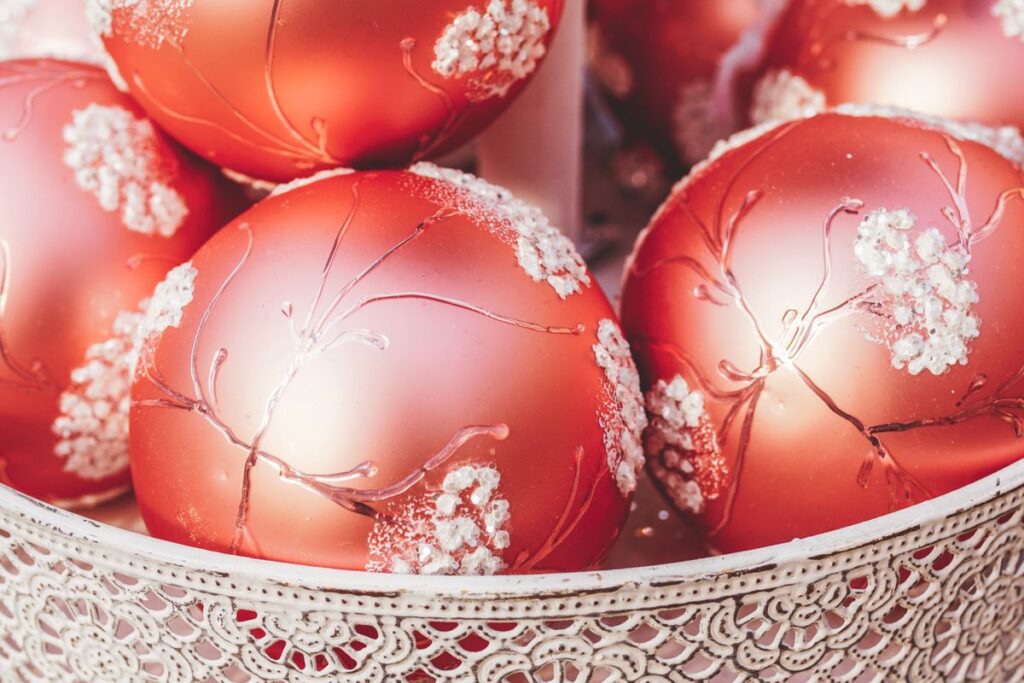
A collection outgrows the tree. That is the moment every collector reaches: more ornaments than branches, and a box left over after the tree is dressed. The answer is not a bigger tree. It is showing the rest of the collection around the house.
A bowl of glass balls on the coffee table. A cloche over three figurals on the sideboard. A garland of small ornaments across the mantel, a wreath studded with them on the front door, a tiered tray of tiny ones in the kitchen. Ornaments displayed this way get seen all season, not just when somebody looks at the tree — and the fragile ones stay safe from the branches and the cat.
A display stand turns a single special ornament into a centerpiece — the figural you found at the estate sale, the Keepsake from the year that mattered, the ball with the silvering still perfect. One ornament, given its own stage, reads as the treasure it is.
And for the glow that goes with the display — the lights that make glass ornaments shine after dark — the vintage Christmas lighting post covers bubble lights, ceramic trees, and old-fashioned glow.
Keeping Them Safe: How Do You Store Ornaments So They Last?
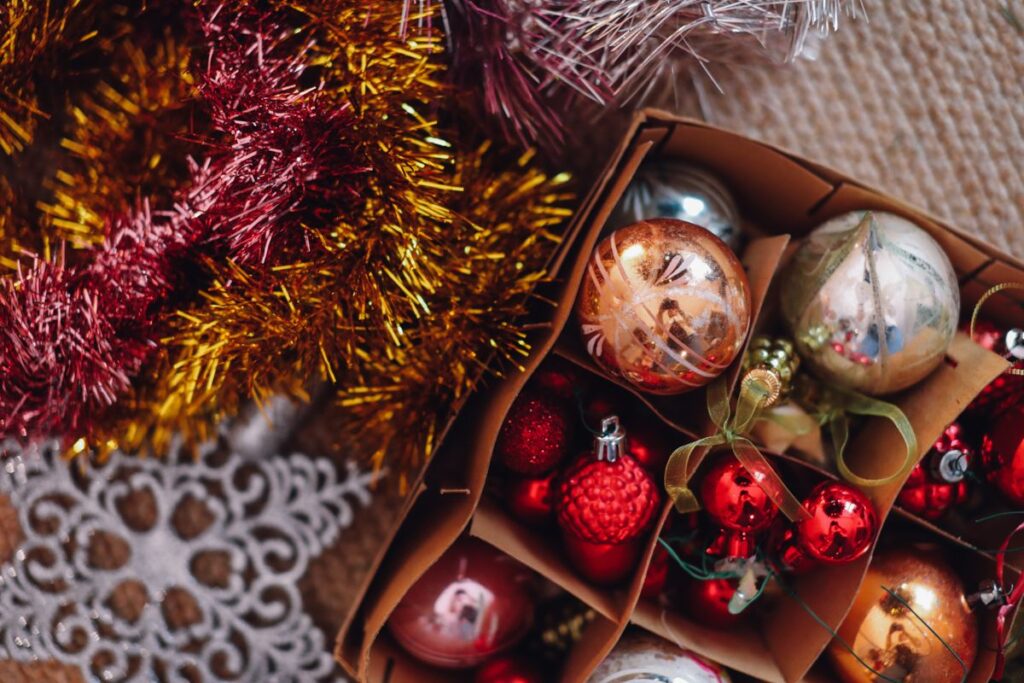
The ornament that survives is the one stored right. Glass balls chip against each other, figurals lose their paint to damp boxes, and tissue paper gone acidic does more damage than a fall from the tree. The box your ornaments live in for eleven months of the year matters as much as the tree they hang on for one.
Wrap each glass ornament in clean tissue paper — not newspaper, which transfers ink — and give each one its own compartment, so nothing touches anything else. Keep the box somewhere dry and steady in temperature: a closet, not an attic, not a damp garage. And label the box. Future you, opening it next December, will thank present you.
A storage box with dividers does the work for you — one ornament per slot, stacked and safe, and the box itself becomes part of the ritual of opening the collection each year.
Collector’s Cheat Sheet
| Type | What to look for | Where to find it |
|---|---|---|
| Shiny Brite glass balls | Silvered inside; cardboard cap = wartime 1942–45 | Estate sales, eBay, thrift stores |
| Mercury glass | Mottled silvering, cloudy with age | Antique shops, Etsy, reproductions online |
| Figural ornaments | Paint intact, no chips, hook tight | Flea markets, antique malls, eBay |
| Hallmark Keepsakes | Dated; early series (Frosty Friends from 1980) | Hallmark shops, eBay, collector sales |
| Handmade | One of a kind; the uglier, the better | Your kitchen table, craft fairs |
| Nutcrackers | Solid wood, hand-painted, tall | Craft fairs, Christmas shops, thrift stores |
Conclusion
The ornaments in your box are not really about ornaments. They are about the Christmases they came from — the people who hung them, the years they marked, the hands that made them. A glass ball is a glass ball until it is the one your grandmother hung first every year. Then it is the most valuable thing on the tree.
Start with the box you already have. Open it, look at what is there, and hang the one that means the most first. The collection will grow from there — one thrift store, one estate sale, one December at a time. It always does, once you start looking.
FAQ
What are vintage Christmas ornaments worth?
Most are worth more in memory than in money. Common postwar Shiny Brite balls go for a few dollars each; wartime sets, rare figurals, and early Hallmark Keepsakes go for more. Condition matters most — paint intact, no chips, the hook still tight — and the original box adds value. If you are buying to collect rather than to resell, the best price is the one that feels fair for an ornament you love.
How can you tell if a Shiny Brite ornament is real?
Check the cap. A cardboard cap with a yarn or string hanger means wartime, 1942 to 1945, when metal went to the war effort. A stamped metal cap with a spring clip means postwar, 1946 or later. Real Shiny Brites are silvered inside with a mirror-bright lining, and the oldest ones came in brown cardboard boxes marked with the Shiny Brite name. Reissues exist — Christopher Radko has reissued the most popular designs since 2001 — so the cap and the box are the tells, not the shape alone.
Are old glass ornaments safe to hang?
Yes, if they are intact. Check the hook and the cap before you hang anything old — a loose cap drops an ornament. Hang the most fragile ones on inner branches, high up and away from doors, heaters, and curious pets. If an ornament is too fragile to trust on a branch, a display bowl or a stand shows it off with none of the risk.
Where is the best place to find vintage ornaments?
Estate sales first — a whole collection at once, priced to move in a weekend. Then thrift stores, flea markets, and church rummage sales, then eBay and Etsy for specific pieces. Go early, bring cash, and check the cap on every glass ball before you buy it. The hunt is half the hobby, and the story of where you found an ornament becomes part of the ornament.
How do you store vintage ornaments?
Wrap each one in clean tissue paper — not newspaper, which transfers ink — and give each its own compartment so nothing touches anything else. Keep the box somewhere dry with a steady temperature, like a closet, not an attic or a damp garage. Acid-free tissue is worth it for the best pieces, and a labeled box saves next December’s you a lot of guessing.