The Smells of a Vintage Christmas: Nostalgic Candle Scents That Smell Like Childhood
This post contains affiliate links, meaning I may receive a small commission if you make a purchase through my links, at no extra cost to you.
Close your eyes and think of Christmas at Grandma’s house. What do you smell first?
Not what you see. What you smell. The pine the second you walked in the door. Cinnamon from the kitchen, where something was always in the oven. The orange with the cloves stuck in it, sitting on the mantel like it had always been there. The fireplace going in the next room, and underneath all of it, candle wax and peppermint and something old and sweet you could never quite name.
That is what this post is about. Not candles as decorations — everybody writes about that. This is about the scents that carry a whole childhood in them, and how to bring them back into your house this Christmas, one candle at a time.
Key Takeaways
- The most nostalgic Christmas scents are the ones tied to a memory: pine means the tree going up, cinnamon means Grandma’s kitchen, pomanders mean the mantel.
- Every scent in this post was somebody’s childhood first and a product second — lead with the memory and the candle follows.
- Pine and fir are the smell of the tree itself; cinnamon and spice are the smell of baking day.
- Orange-and-clove pomanders are the easiest old-fashioned scent to make yourself: oranges, whole cloves, and ten minutes.
- Bayberry is the oldest tradition here — burned on New Year’s Eve for luck.
- A stovetop simmer pot gives you the whole Christmas smell with no candle at all.
- Woodsmoke anchors the living room; peppermint sweetens it; frankincense and myrrh carry the Christmas Eve church service home with you.
- Grandma’s house smelled like all of these at once without clashing — the cheat sheet at the end shows how, one scent per room.
Pine & Fir: What Did the Tree Smell Like When It Went Up?
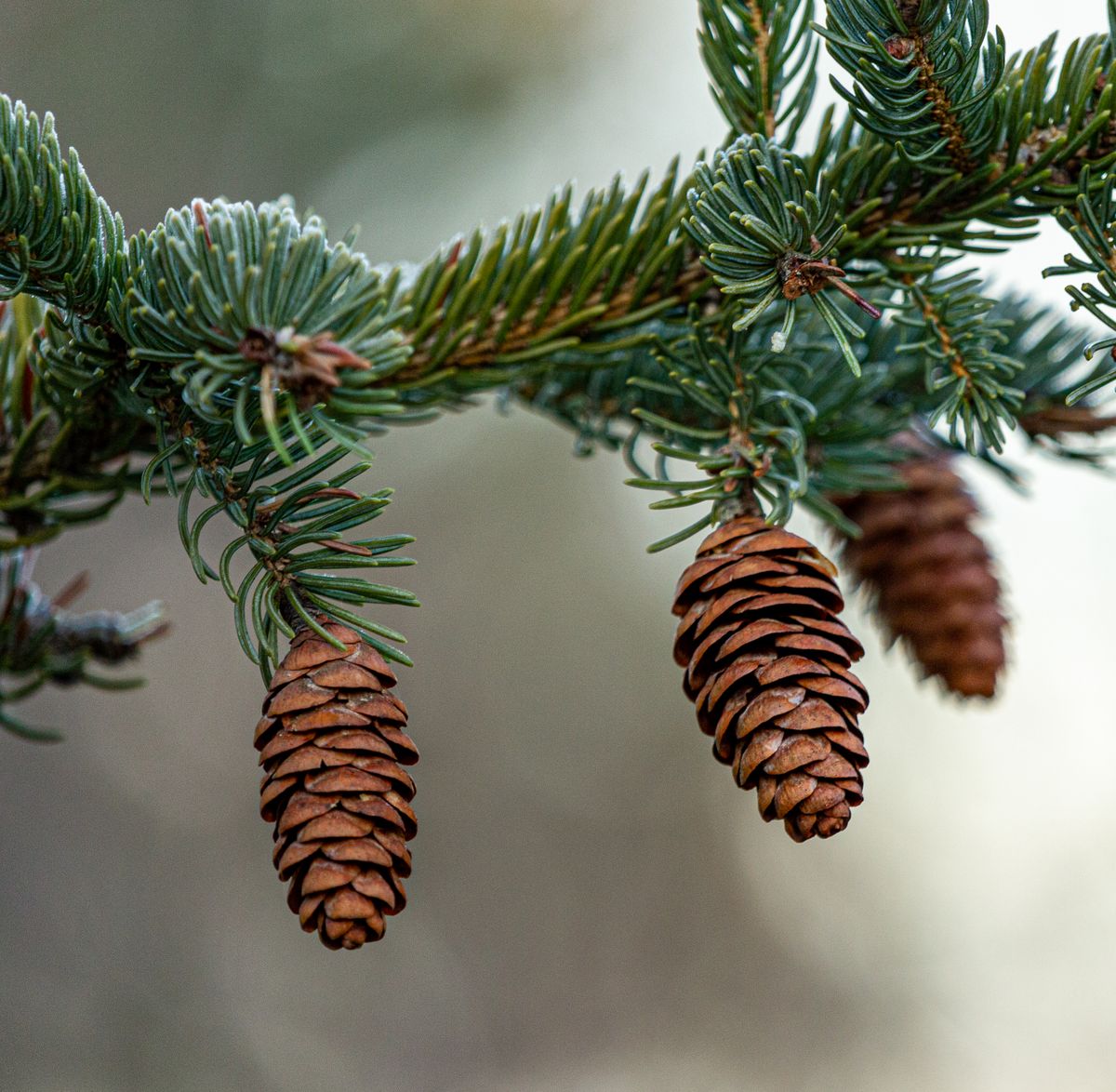
Everybody remembers the moment the tree came through the door. The cold air on it, the needles already dropping on the floor, and that sharp green smell filling the whole house before the tree was even in the stand. That smell is pine and fir, and no other Christmas scent works without it underneath.
A pine-scented candle is the closest thing to that moment in a jar. Light it in the room where the tree stands, and the whole house smells like the day the tree went up, even if your tree is artificial, or small, or still in the box in the garage.
If you are still deciding which tree belongs in your house, the nostalgic tree guide matches nine trees to the rooms and decades they came from.
Cinnamon & Spice: Can a Candle Smell Like Grandma’s Kitchen?
Close your eyes again. Christmas Eve morning, and the kitchen already smells like cinnamon before you are even awake. Something is in the oven. Something else is cooling on the counter. The whole house smells like baking, and it will smell like baking until well after dark.
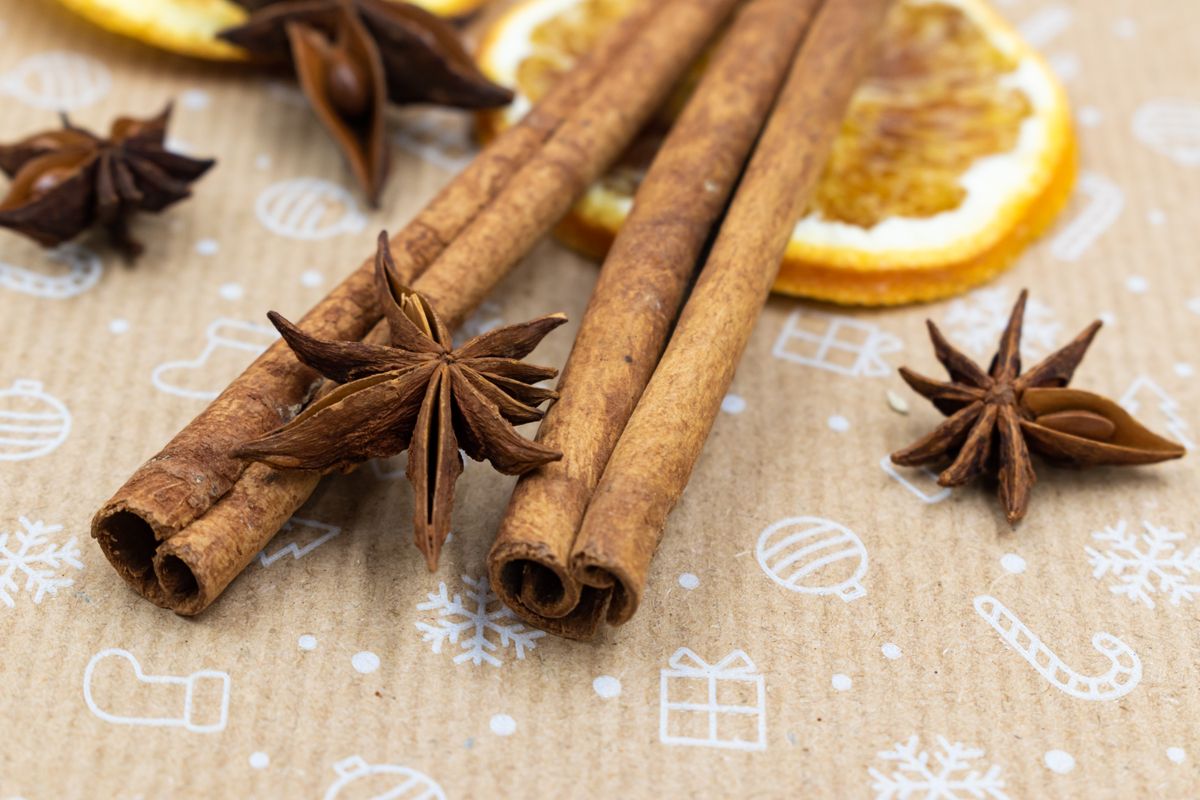
That is cinnamon and spice: the scent of a kitchen where somebody loved you enough to spend all day in it. Cinnamon sticks, star anise, a little nutmeg, maybe a dried orange slice tucked in for color — the spices in this photo are the same ones that went into the cookies and the pies, and the smell of them is the smell of being fed and looked after.
Cinnamon spice Christmas candle
For the whole kitchen-counter Christmas — the cookie tins, the canisters, the table set for the people you love — Grandma’s Christmas Kitchen is where that story lives.
Orange & Clove: Do You Remember the Pomander on the Mantel?
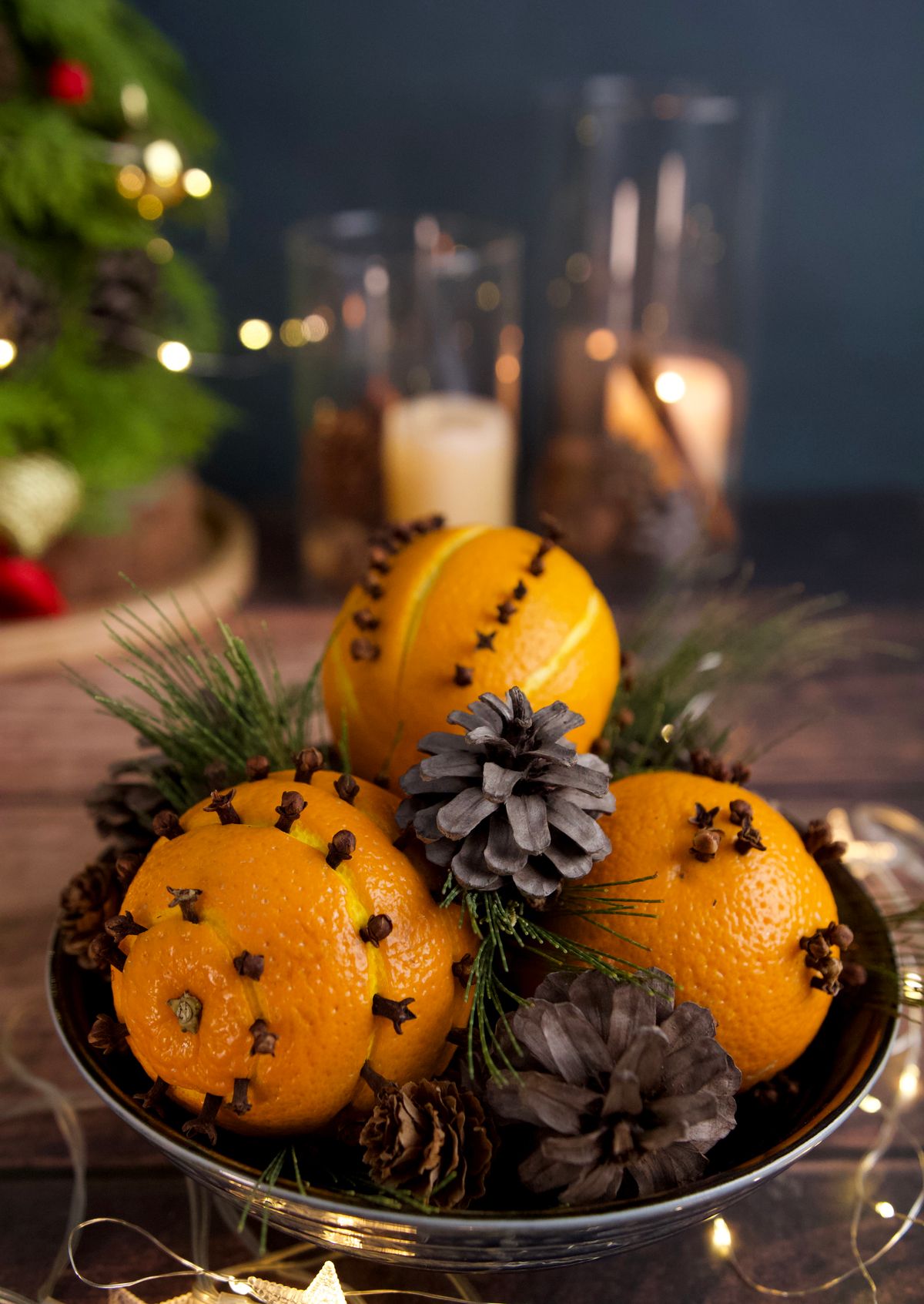
There was always an orange with cloves stuck in it somewhere in the house. On the mantel. On the windowsill. Hanging from a ribbon in the closet, keeping the winter coats smelling like Christmas. Nobody bought it. Somebody made it, sitting at the kitchen table, pushing whole cloves into an orange one by one until the orange looked like a little studded jewel.
Pomanders are the oldest make-it-yourself Christmas scent there is, and the easiest: take an orange, push whole cloves into the peel in whatever pattern you like, and set it where the air moves. The oranges in this photo are real pomanders, cloves and all, with pinecones and a little evergreen tucked around them. They will scent a room for weeks, and they look like Christmas while they do it.
If you would rather buy than make, a pomander kit gives you the oranges’ old-fashioned perfume in candle form — but honestly, try making one first. It takes ten minutes, and your hands smell like Christmas for the rest of the day.
Bayberry: What Is the Oldest Christmas Candle Tradition of All?
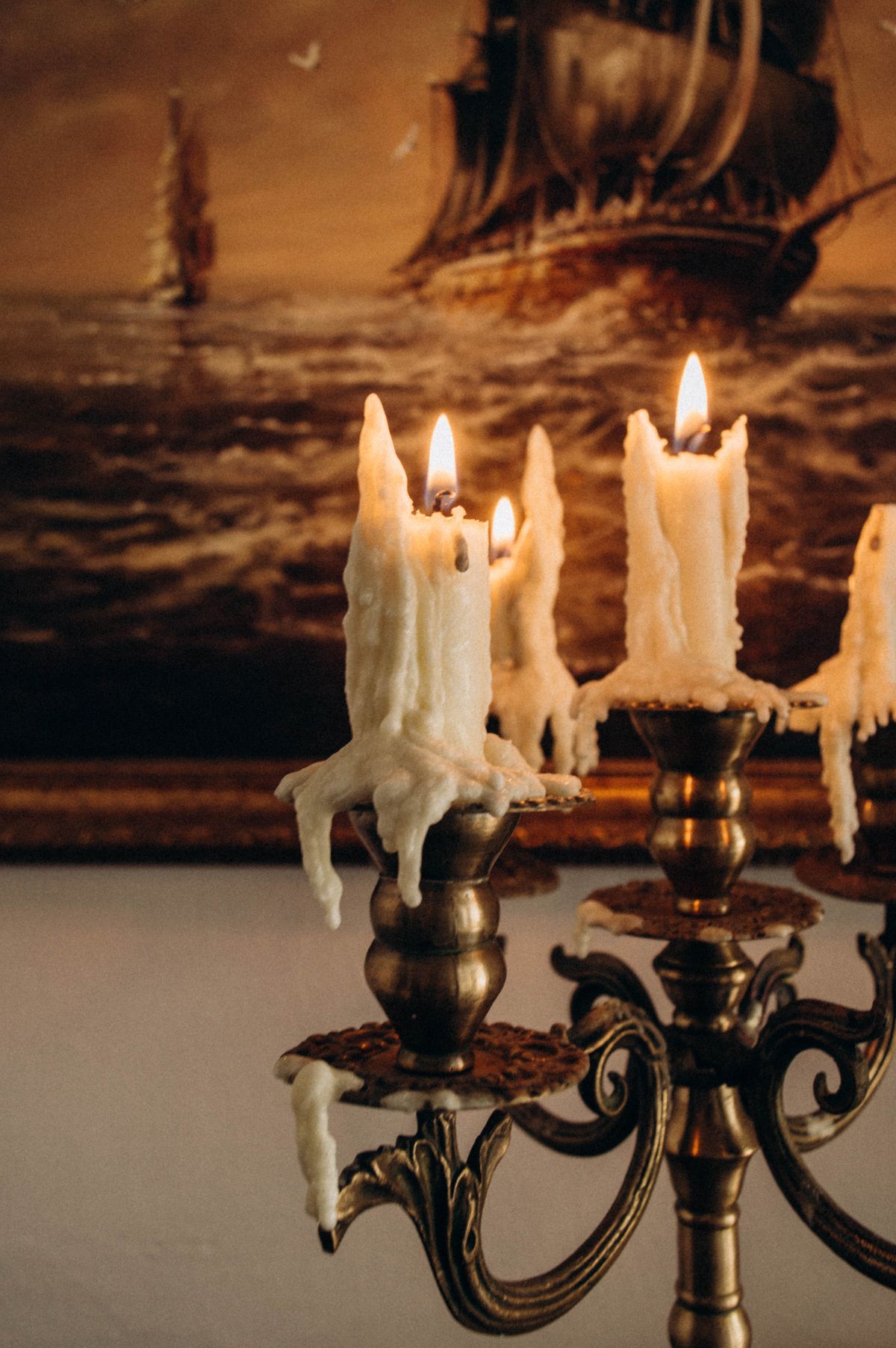
Bayberry is the most old-fashioned scent in this whole post, and most people have never heard of it. The tradition comes from New England, where bayberry candles were burned on Christmas Eve or New Year’s Eve for luck in the year ahead. The old saying was that a bayberry candle burned to the socket on New Year’s Eve would bring good fortune — and families who could not afford much could afford that one small ritual.
The candles in the photo here are plain white tapers in a brass candelabra, the way bayberry candles would have been burned: tall, dripping, lit in the evening and left to burn down while the house settled for the night. Real bayberry candles are harder to find than the others on this list, and that is part of their charm — they are a tradition you have to go looking for.
Cranberry & the Simmering Pot: What If the Best Christmas Scent Isn’t a Candle at All?
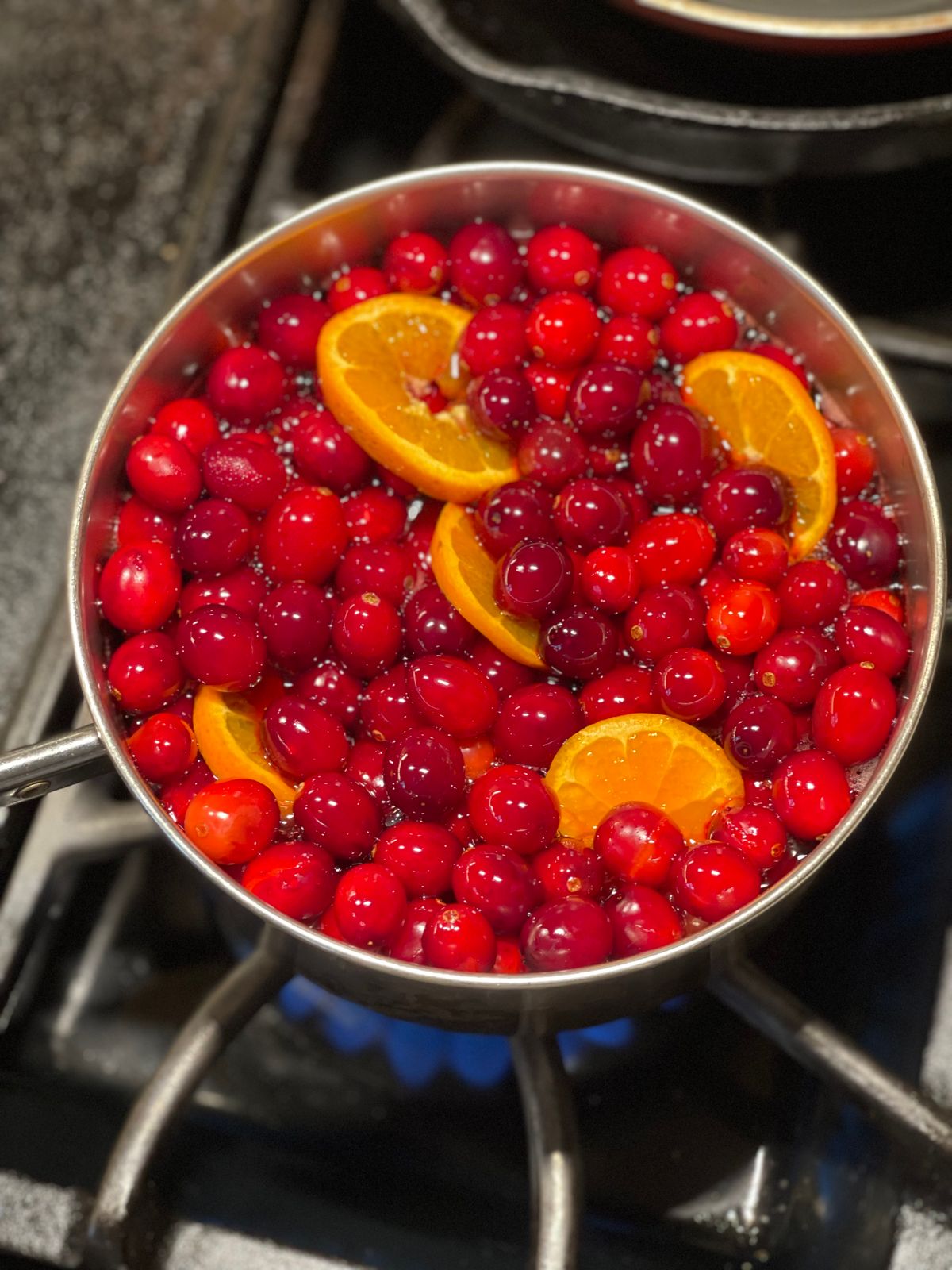
Some of the best Christmas smells never came from a candle. They came from a pot on the stove: cranberries, orange peel, cinnamon sticks, and whole cloves, simmering in water on the lowest heat, filling the house with a smell so warm and red and sweet that people would wander into the kitchen just to stand near it.
The pot in this photo is exactly that — cranberries and orange slices simmering away on a lit burner, the way Grandma’s pot did all December long. A stovetop simmer pot is the no-candle option for anyone with pets, small children, or a landlord with opinions about open flames, and it is the cheapest Christmas scent there is: fruit, spices, water, and a stove you already own.
Keep the water topped up, keep the heat low, and the same pot will scent your house for days. When the cranberries finally give out, start a fresh pot — it takes five minutes and the house smells like Christmas again by lunchtime.
Woodsmoke & the Fireplace: Where Does the Living Room Smell Come From?
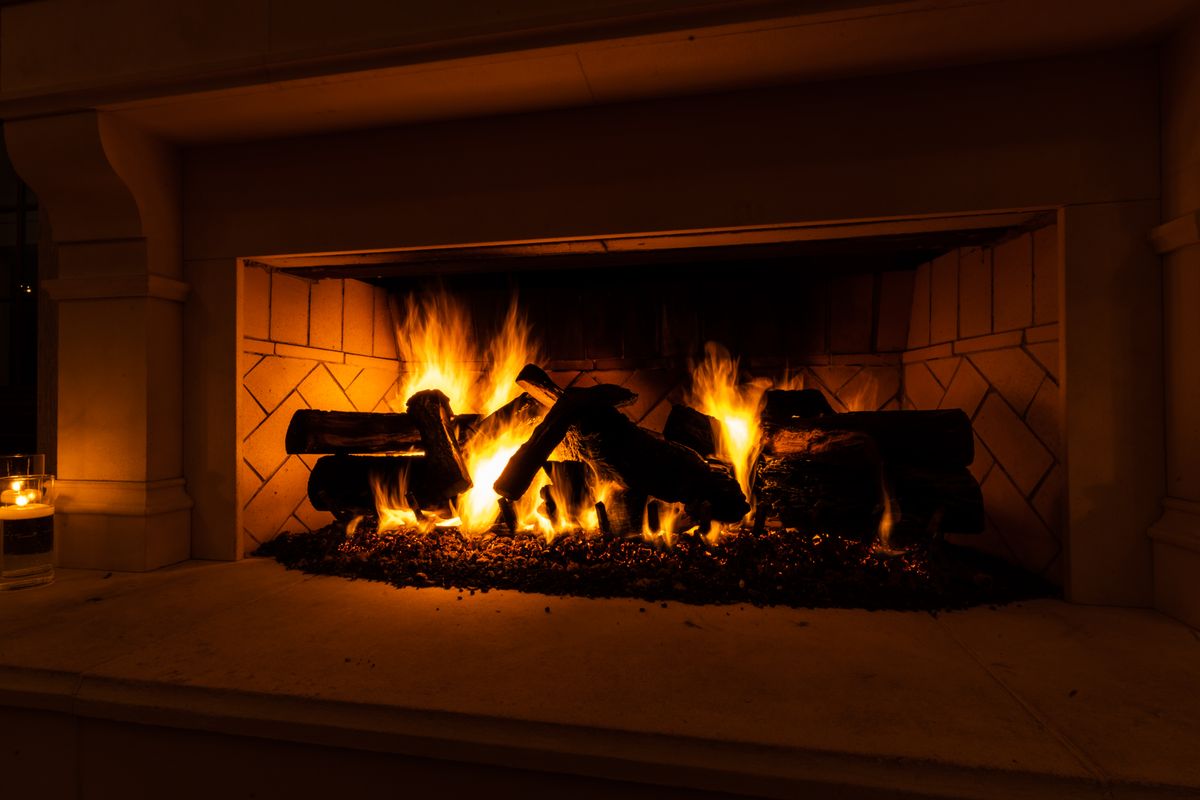
Every old house had a room that smelled like woodsmoke in December, and it was always the room everybody ended up in. The fire went on in the afternoon, the mantel got its garland, and the whole living room smelled like burning logs and warm stone until bedtime.
A woodsmoke or fireplace candle is how you get that room back when there is no fireplace in it — or when the fireplace is decorative, or the weather is too warm to light a real fire, which in Florida is most Decembers. Light it where people gather, and the room does the rest.
The fire in this photo is the real thing, roaring in a wide stone fireplace with a candle burning on the hearth beside it. If you have a fireplace, light it. If you do not, a candle and a comfortable chair will do the same work — the smell is what makes the room, not the masonry.
Peppermint & Candy Cane: What Did the Candy Jar Smell Like?

Every grandmother had a candy jar, and every candy jar had peppermint in it. Candy canes at Christmas, peppermint sticks the rest of the year, and the sharp sweet smell that hit you the second the lid came off. The candy canes in this photo are the real thing — red and white, the way they hung on the tree and filled the jar on the side table.
Peppermint is the sweet one in this post, and the one kids remember first. It cuts through the heavier scents — the pine, the spice, the woodsmoke — the way a candy cane cut through a rich Christmas dinner. A peppermint candle in the room where the stockings hang is the fastest way to make a house smell like Christmas morning.
If bright and colorful is your whole Christmas philosophy, the candy-cane reds in this photo are the same palette as the colorful vintage Christmas post.
Frankincense & Myrrh: Do You Remember the Church Smell?
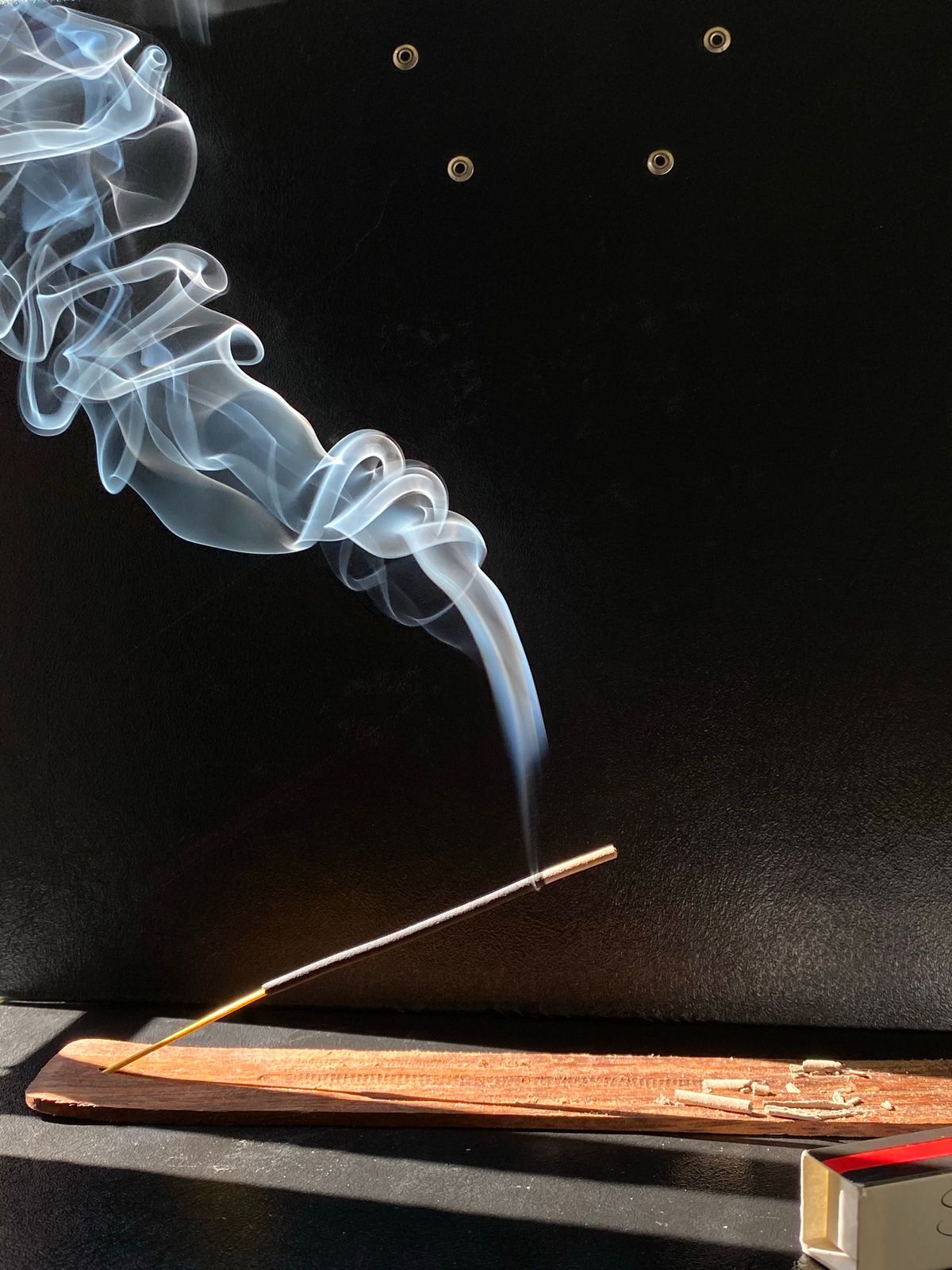
There is a smell that belongs to Christmas Eve service and nowhere else: incense, old wood, candle wax, and something deep and resinous underneath it all. Frankincense and myrrh — the gifts the wise men brought — are the oldest Christmas scents of all, and the most reverent. They smell like a quiet church on a cold night, and like the walk home afterward with the stars out.
The photo here is a burning incense stick, its smoke curling up against the dark. That smoke is the closest most of us get to the frankincense of the Christmas story, and it is the right image for this scent: old, slow, and a little mysterious. A frankincense and myrrh candle or incense brings that reverent quiet into the house, and it is the one scent in this post that asks you to slow down rather than celebrate.
Frankincense and myrrh incense
Light it last, after the cooking and the wrapping and the noise. It is the scent for the quiet hour, when the house is finally still.
Layering the Old-Fashioned Way: How Did Grandma’s House Smell Like All of These at Once?
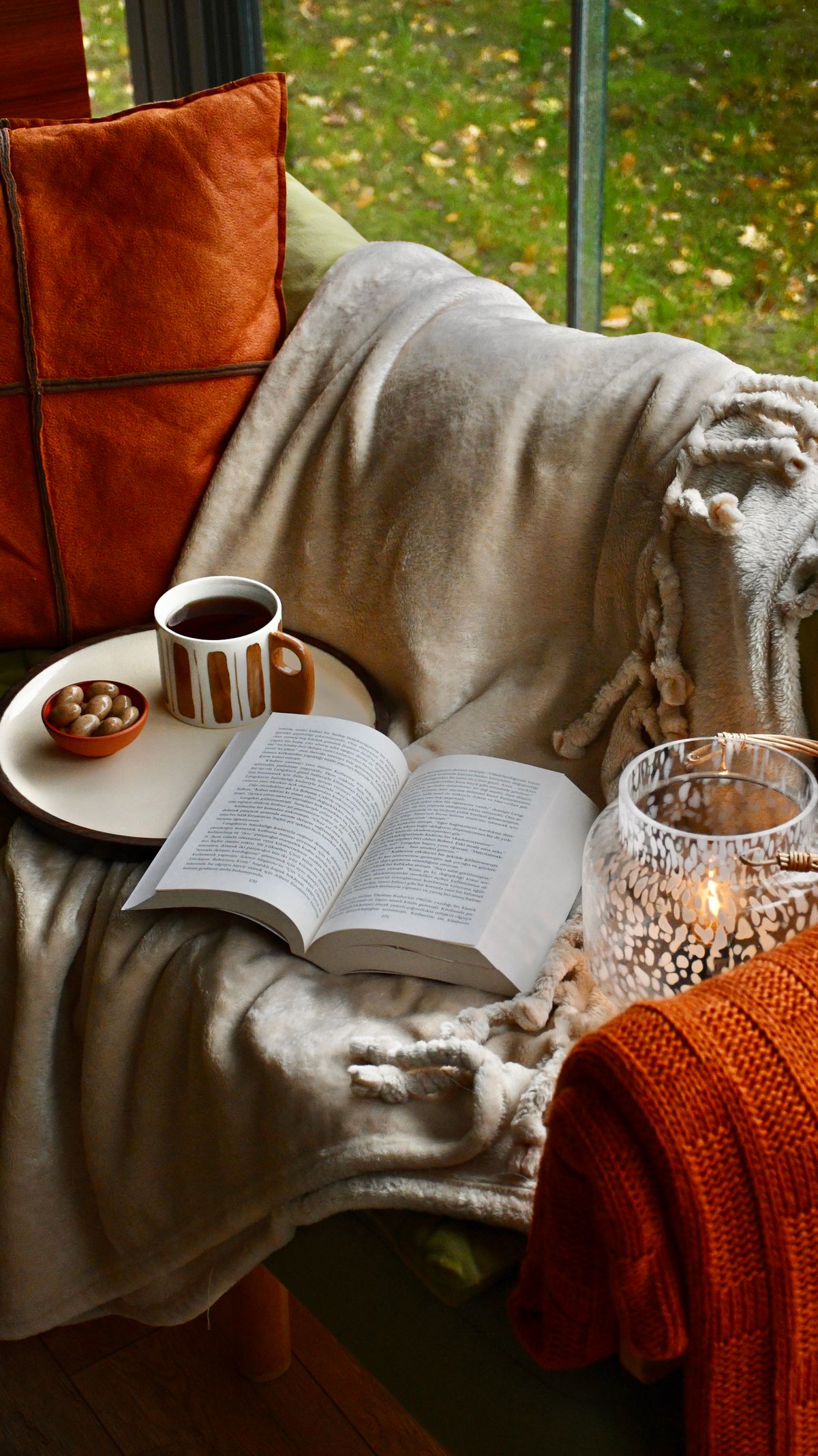
Here is the question everybody asks about this list: if you light all of these, does the house not smell like a candle shop exploded? It does not — because Grandma’s house never lit them all in one room. It layered them, one scent per room, the way a house layers its rooms.
Pine where the tree stands. Cinnamon in the kitchen. A pomander on the mantel, bayberry tapers on the dining table, the simmer pot on the stove, woodsmoke in the living room, peppermint where the stockings hang, frankincense in the quiet corner. Each room has its own scent, and walking through the house is walking through the whole Christmas.
The corner in this photo is the last piece of it: a candle lantern lit, a blanket over the arm of the sofa, a book open, a cup of tea going cold. The Danes have a word for this — hygge — and 85% of Danes associate hygge with candles, because a lit candle is the simplest version of it: warmth, light, and nowhere else you need to be. You do not need to buy anything to have it. You need a candle, a blanket, and an evening with nothing on it.
Scent Cheat Sheet
| Scent | Room | Candle or pot |
|---|---|---|
| Pine & fir | Where the tree stands | Pine-scented candle |
| Cinnamon & spice | Kitchen | Cinnamon-spice candle |
| Orange & clove | Mantel or windowsill | Pomanders, or orange-clove candle |
| Bayberry | Dining table | Bayberry tapers |
| Cranberry simmer pot | Stove | Stovetop pot, no candle needed |
| Woodsmoke | Living room | Fireplace or woodsmoke candle |
| Peppermint | Where the stockings hang | Peppermint candle |
| Frankincense & myrrh | Quiet corner | Incense or frankincense candle |
For the glow side of the story — the lights that go with these scents — the vintage Christmas lighting post covers bubble lights, ceramic trees, and old-fashioned glow.
Conclusion
The candles on this list are not really about candles. They are about the rooms we grew up in, and the people who made them smell the way they did. Pine means somebody brought a tree through the door. Cinnamon means somebody spent all day in the kitchen. A pomander means somebody sat at the table and made something with their hands, for no reason except that Christmas was coming.
Pick the scent that smells most like your childhood, and start there. One candle, one room, one memory at a time. The rest of the house will follow — it always does, once the first candle is lit.
FAQ
What is the most nostalgic Christmas scent?
Pine, for most people — it is the smell of the tree coming through the door, and everything else in the house stacks on top of it. But the honest answer is whichever scent matches your own childhood kitchen or living room. For some people it is cinnamon. For some it is the church smell. The most nostalgic scent is the one that brings your grandmother’s house back.
Are bayberry candles really burned for luck?
Yes — that is the old New England tradition. A bayberry candle burned to the socket on New Year’s Eve was said to bring good fortune for the year ahead. The tradition is centuries old, and bayberry candles are still made today, though they are harder to find than pine or cinnamon candles.
How do you make a stovetop simmer pot?
Fill a saucepan with water, add a handful of cranberries, a few orange slices or peels, two or three cinnamon sticks, and a spoonful of whole cloves. Bring it to a gentle simmer on the lowest heat and leave it there, topping up the water as it evaporates. One pot scents the house for days.
Can you mix candle scents without clashing?
Yes, if you give each scent its own room. Pine where the tree stands, cinnamon in the kitchen, woodsmoke in the living room — the house layers the scents the way it layers its rooms. What clashes is three strong candles in one small room. One scent per room, and walking through the house smells like walking through the whole Christmas.
Are real candles safe around a Christmas tree?
Real candles and Christmas trees need distance and attention. Never leave a burning candle unattended, keep candles well away from branches, garlands, and wrapping paper, and never put a lit candle on or under the tree. If you have small children or pets, or you want the glow without the flame, battery-operated candles give you the light with none of the risk.