
Grandma’s Christmas Kitchen: Vintage Holiday Decor and Baking Ideas
This post contains affiliate links, meaning I may receive a small commission if you make a purchase through my links, at no extra cost to you.
Close your eyes and think about Christmas at your grandmother’s house. The tree was beautiful, yes. The stockings were sweet. But the room you keep coming back to — the warm one, the one that smelled like cinnamon and vanilla and something buttery in the oven — is the kitchen. That is where December actually happened. Cookies rotated through the oven in shifts. A pot on the back burner was always just starting to simmer. And every flat surface held proof that somebody was loved and about to be fed.
The good news is that a grandma’s Christmas kitchen is one of the easiest nostalgic rooms to recreate, because it was never about a remodel. It was about tins and towels, bowls and tablecloths — small, useful things layered with love. This guide walks through the pieces that made those kitchens feel the way they did, and how to bring the same feeling into yours this year. If you are decorating the whole house in this spirit, start with my guide to nostalgic Christmas decor for every room, and for the year-round version of this room, see my favorite grandma’s vintage kitchen decor pieces.
Key Takeaways
- A grandma’s Christmas kitchen is built from useful things — cookie tins, flour-sack towels, canisters, mixing bowls — not from decorations bought for decoration’s sake.
- The cookie tin lineup on the counter is both storage and the main visual event; line tins with wax paper and let them stay out all season.
- Red, green, cream, and a little gold is the palette, and it mostly arrives on textiles: towels, tablecloths, curtains, and one good apron.
- Baking tools double as decor. Mixing bowls, cookie cutters, and a wooden rolling pin earn their counter space in December.
- Start with one corner — a cocoa station by the stove or a dressed-up counter — and let the room grow from there.
- Almost everything on this list is inexpensive, washable, and packs away in a single box in January.
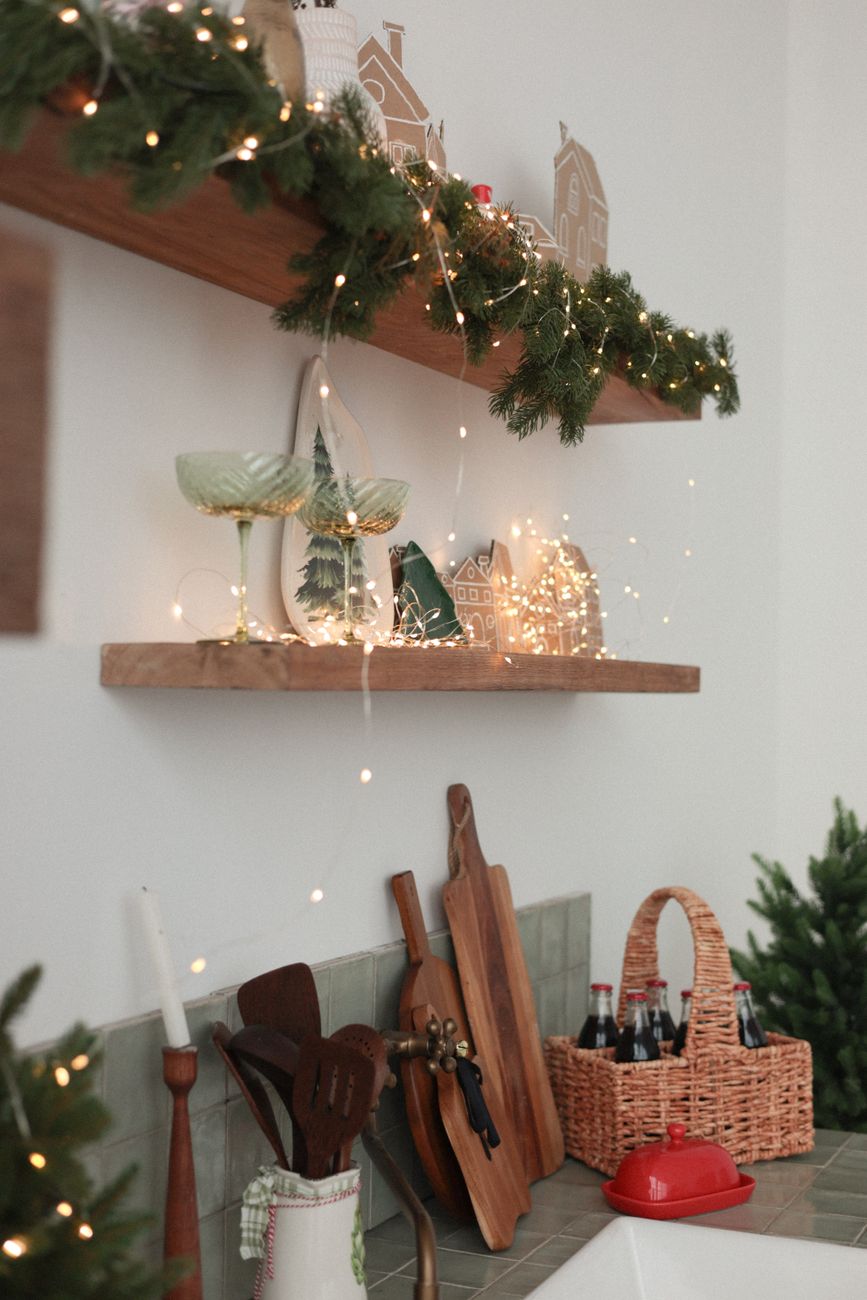
Why the Kitchen Was Always the Heart of Christmas
Ask anyone where their family actually gathered at Christmas and almost nobody says the living room. They describe a kitchen doorway, a stool by the counter, a spot at the table “helping” by way of tasting. The kitchen was headquarters.
It ran on love and lists
Grandma’s Christmas kitchen worked because it was a system wrapped in affection. There was a list on the refrigerator, a baking schedule in her head, and a tin for every cookie with a name. Recreating the feeling starts with recreating a little of that gentle order: baking supplies out where they are used, treats stored visibly and generously, and a table that is always one chair away from a conversation.
The room everybody drifted back to
There is a practical decorating lesson in that memory. The kitchen felt festive because it was active — something was always baking, cooling, or being frosted. When you style your own kitchen for Christmas, plan for it to look alive: a bowl of oranges, a plate under a glass dome, cookies visible in tins rather than hidden in a pantry. Use is the decoration.
The Cookie Tin Lineup
If a grandma’s Christmas kitchen had a skyline, it was the row of tins along the back of the counter. Danish butter cookie tins, fruitcake tins, tins with cardinals and tins with sleighs — every one of them full, and every one of them a small promise.
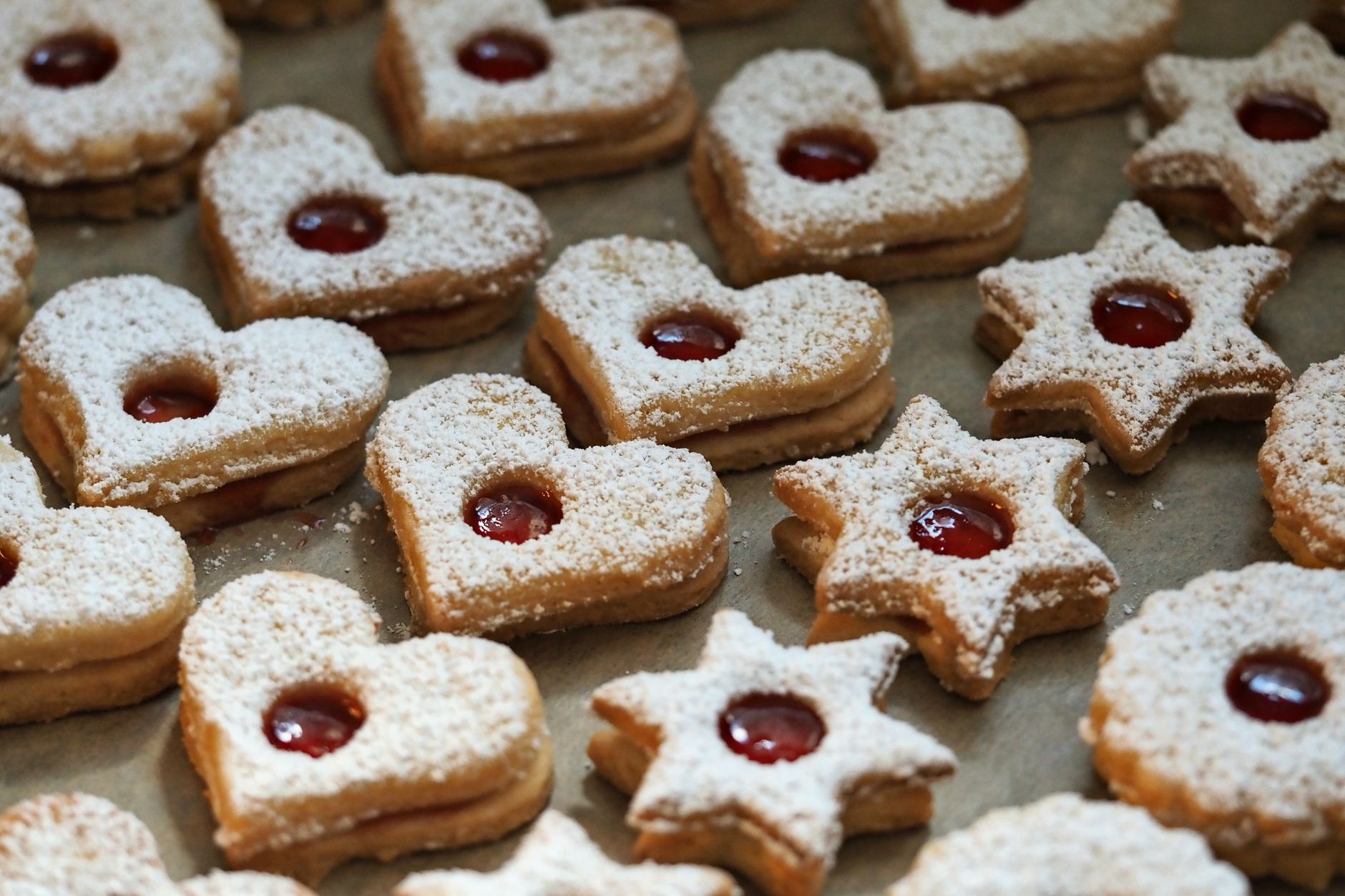
The tins were the storage AND the decor
The genius of the lineup is that it never got put away. Those tins sat out from the first baking day to New Year’s, which means they carried most of the room’s Christmas color all by themselves. A set of tins in graduated sizes, in classic reds and greens with old-fashioned artwork, does more for a kitchen than a bin of ornaments ever could.
Vintage-style Christmas cookie tin set
Line them with wax paper, fill them with love
The practical ritual matters as much as the look. Line each tin with wax paper, layer the cookies with paper between the rows, and never mix strong flavors in one tin — the peppermint will move into the shortbread by Thursday; that is simply the law. A tin on the counter by the coffee maker, kept full for whoever wanders through, is the single most hospitable object in a December house.
Dressing the Counters: Canisters, Bowls, and Baking-Day Tools
With the tins in place, the rest of the counter falls into line. The rule from Grandma’s kitchen is simple: if it works hard in December, it is allowed to live out in December.
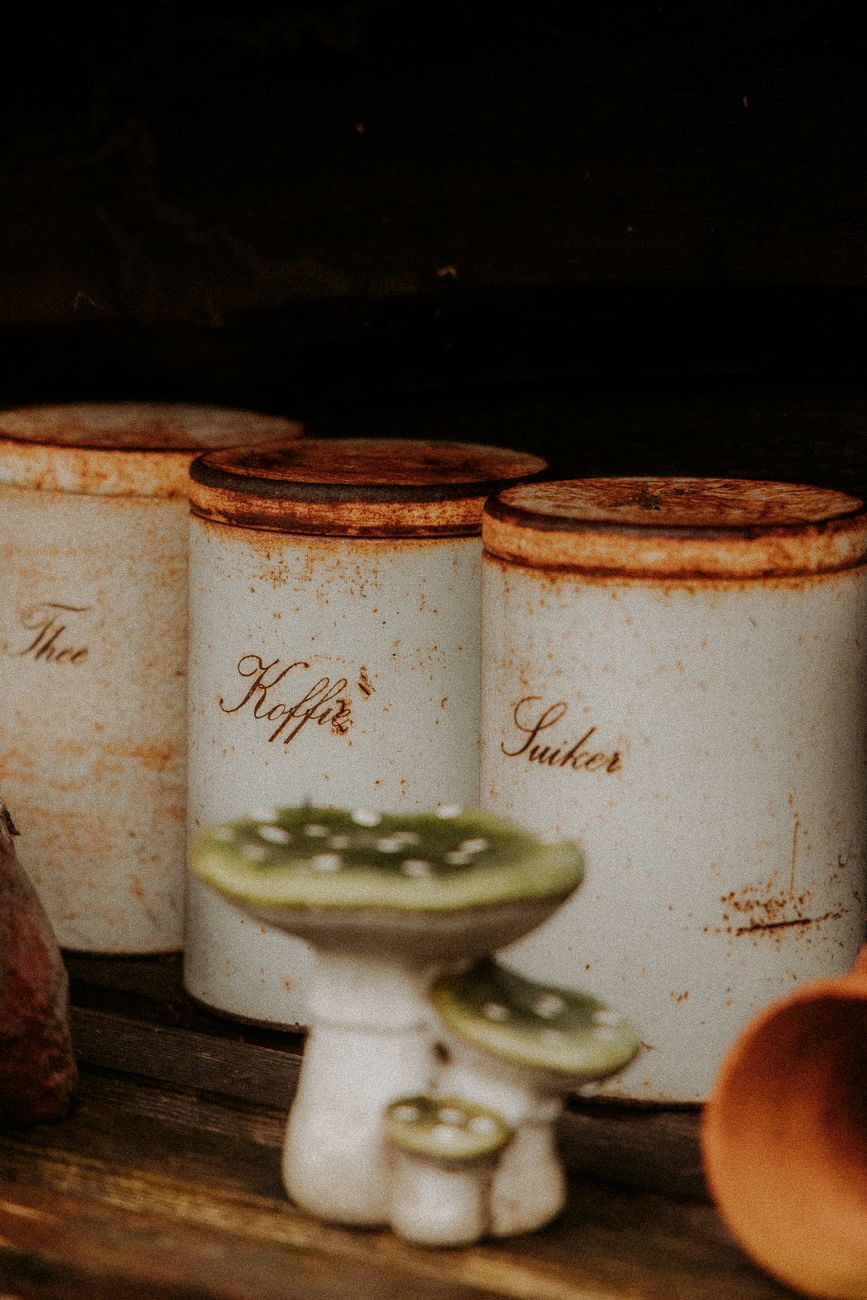
A canister set dressed for the season
Flour, sugar, and coffee lived in canisters all year, but at Christmas the set got promoted to the front of the counter and joined by cocoa and marshmallows. A canister set with a holiday pattern — or a plain cream set tied with ribbon — keeps baking supplies at arm’s reach and reads as decor while doing it.
Christmas canister set with lids
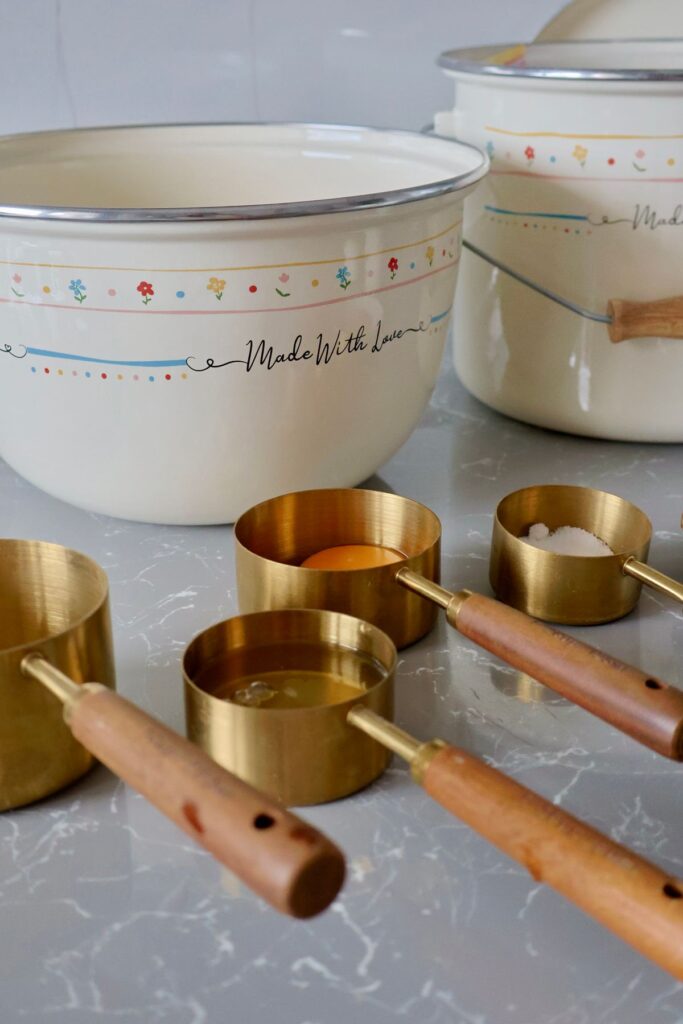
The mixing bowl that held everything
Every one of those kitchens had a bowl: big, heavy, usually patterned, and older than half the family. It mixed cookie dough, held rising rolls under a towel, and appeared at the table filled with mashed potatoes. A sturdy vintage-style mixing bowl set in a classic pattern is a working tool that looks like an heirloom from the day it arrives.
Vintage-style ceramic mixing bowl set
Round out the baking-day lineup with the wooden spoon and the heavy rolling pin, left out on the counter like the tools they are. In a Christmas kitchen, a rolling pin dusted with flour is not clutter. It is a centerpiece with a job.
Cookie Cutters with Stories
Ask a grandmother about her cookie cutters and you will not get a product review. You will get a family history: the star from a sister’s set, the reindeer that always loses an antler, the gingerbread man whose dough you ate raw in 1987.
Shapes that mean Christmas
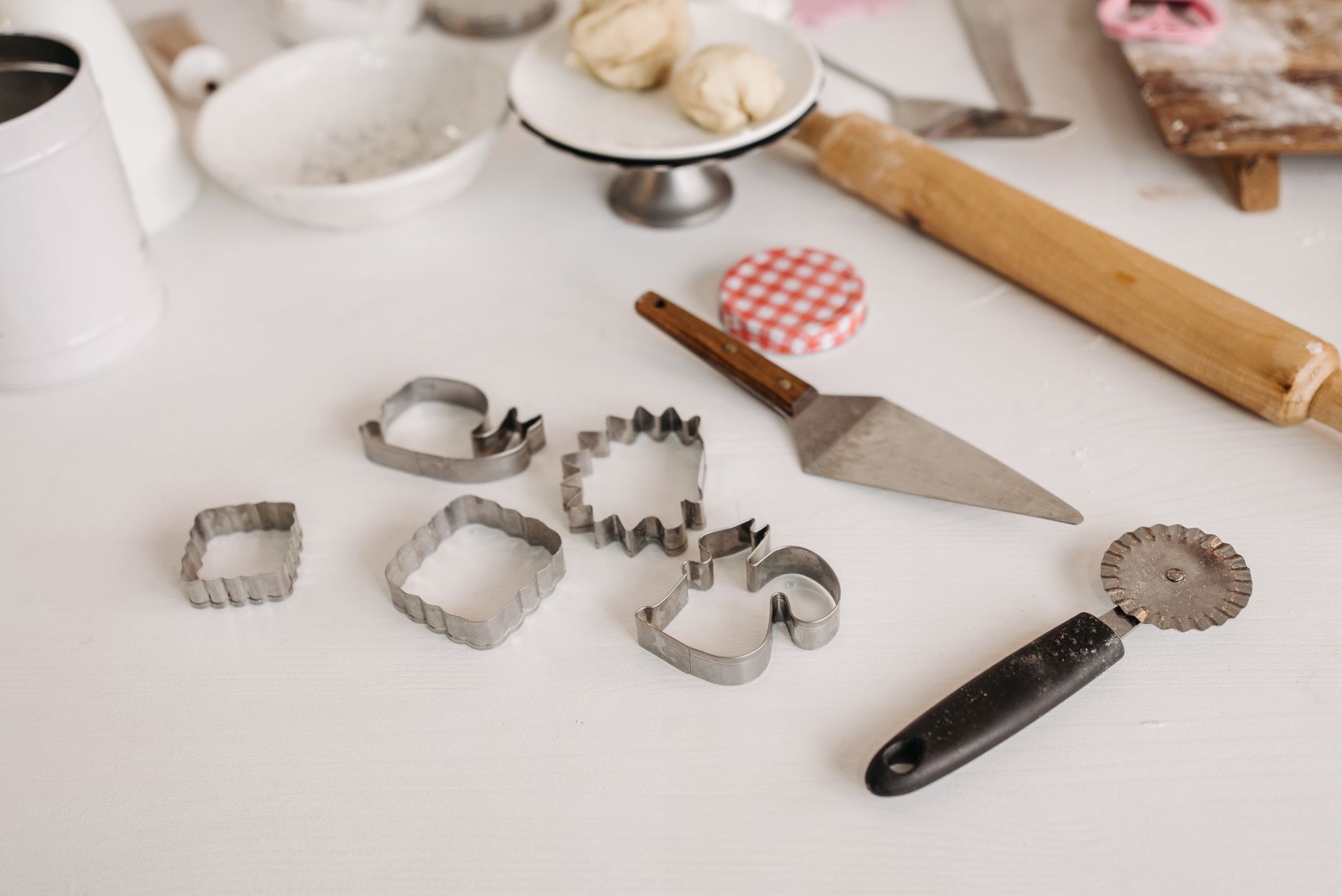
The classic set is metal, simple, and unmistakable: a star, a tree, a bell, a stocking, a gingerbread person, and one good snowflake. Vintage-style metal cutters have that thin, slightly flexible edge that cuts clean and releases easy, and they nest inside each other in a drawer like they are hibernating until December.
Vintage-style metal cookie cutter set
Are old cookie cutters safe to use?
Mostly, yes — with a little common sense. True vintage cutters are fine for food if they are clean, rust-free, and the soldered seams are intact; wash them by hand, dry them immediately and thoroughly (rust starts in the seams), and retire any cutter with flaking rust or a broken seam to decoration duty. If that sounds fussy, a new set made in the vintage style gives you the shapes and the silhouette with none of the questions — which is exactly why they sell out every November.
The decorating system
Grandma’s decorating was a production line, not an art show: cookies cooled on racks that covered the table, frosting lived in coffee mugs, and sprinkles were applied by the youngest available hands, generously and without supervision. Set yours up the same way and the “decorating” becomes the memory instead of the mess you dread.
Towels, Aprons, and the Flour-Sack Touch
If the tins are the skyline, the textiles are the weather — they set the whole mood of the room. And in a grandma’s kitchen, the textiles were almost all one humble hero: flour-sack cotton.
The good towels come out in December
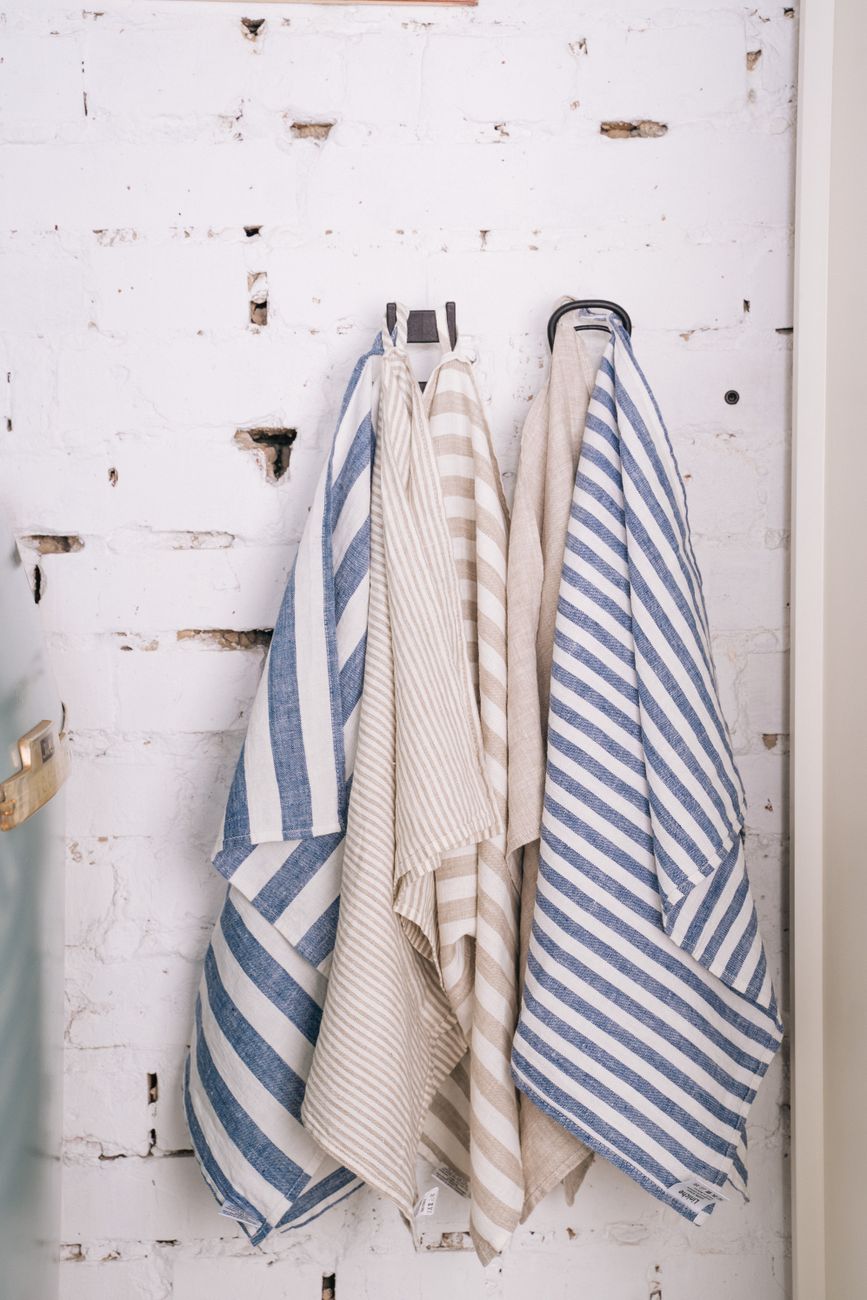
Everyday towels worked the rest of the year, but December brought out the good ones: white flour-sack towels with a red stripe, towels embroidered with a cardinal or a sprig of holly, towels that dried a dish perfectly and then hung over the oven door looking like a magazine. Cotton flour-sack towels are still the right fabric — thin, absorbent, quick to dry — and a Christmas set in deep reds and greens swaps the room’s whole feeling in about ten seconds.
Christmas flour-sack kitchen towels
One good apron
The apron is the other half of the look, and it is functional nostalgia: pockets for the spoon, protection for the good shirt, and a signal to the whole house that baking is officially underway. Hang it on a hook by the stove the day the first batch goes in, and the kitchen is dressed — even before a single tin comes out.
A Cocoa Corner by the Stove
Every Christmas kitchen had a drink station before drink stations had a name: a kettle, a tin of cocoa, and mugs ready for whoever came in cold from outside.
Keep it small and always ready
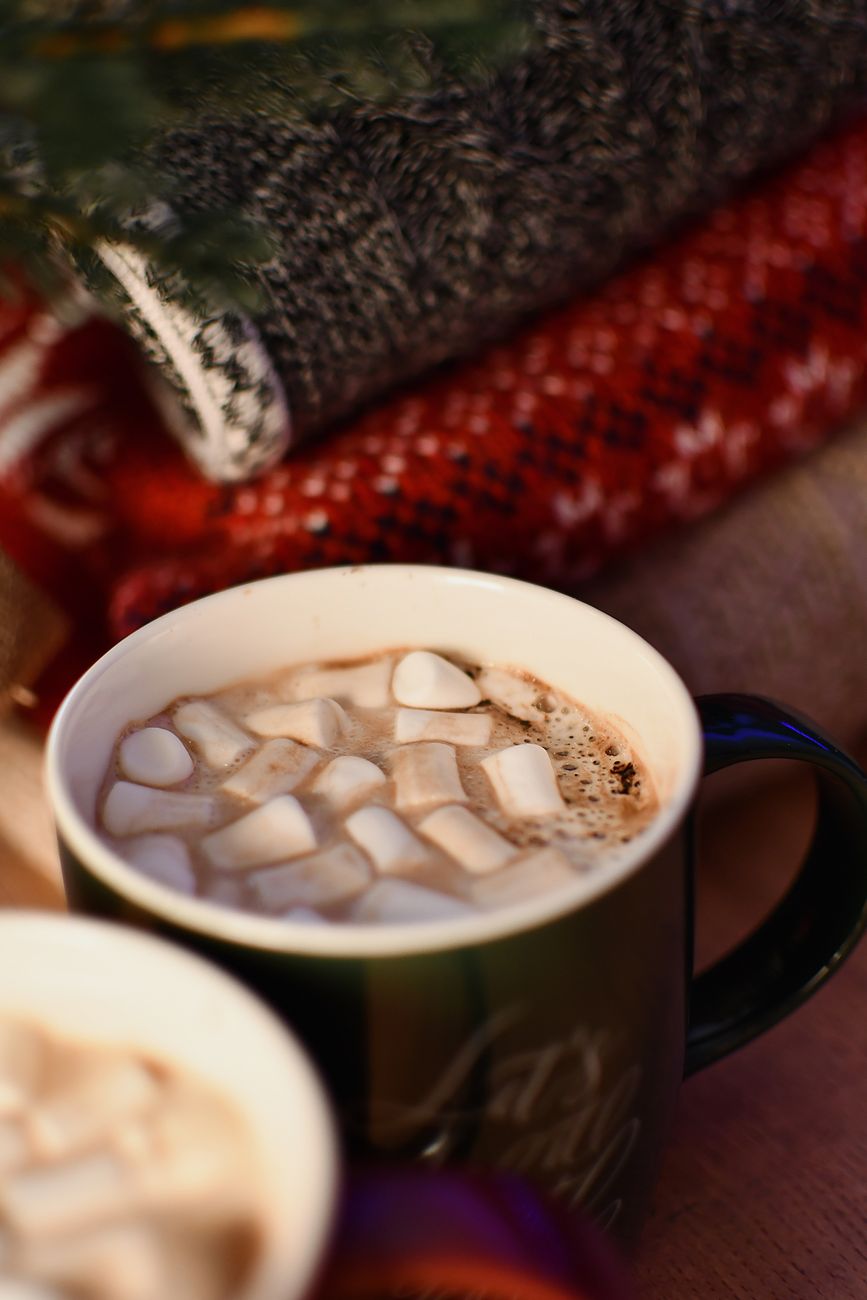
The corner works because it is tiny. Claim one stretch of counter near the stove or coffee maker: a small tray, the cocoa canister, marshmallows in a jar, candy canes standing in a crock for stirrers, and a stack of mugs. When it is always ready, it gets used all day long — which is the point. A grandchild who can make their own cocoa in your kitchen is a grandchild who feels at home in it.
Santa mugs are the correct vessels here — the jolly, dimensional kind that made hot chocolate taste better by law of childhood. A set of four covers a cocoa crowd, and they display beautifully on the tray the rest of the day.
The Christmas Tablecloth Comes Out
In the homes we grew up in, the kitchen table got dressed before the dining room did, because the kitchen table is where everybody actually sat — for frosting duty, for card games, for the second cup of coffee nobody needed.
One cloth, whole room changed
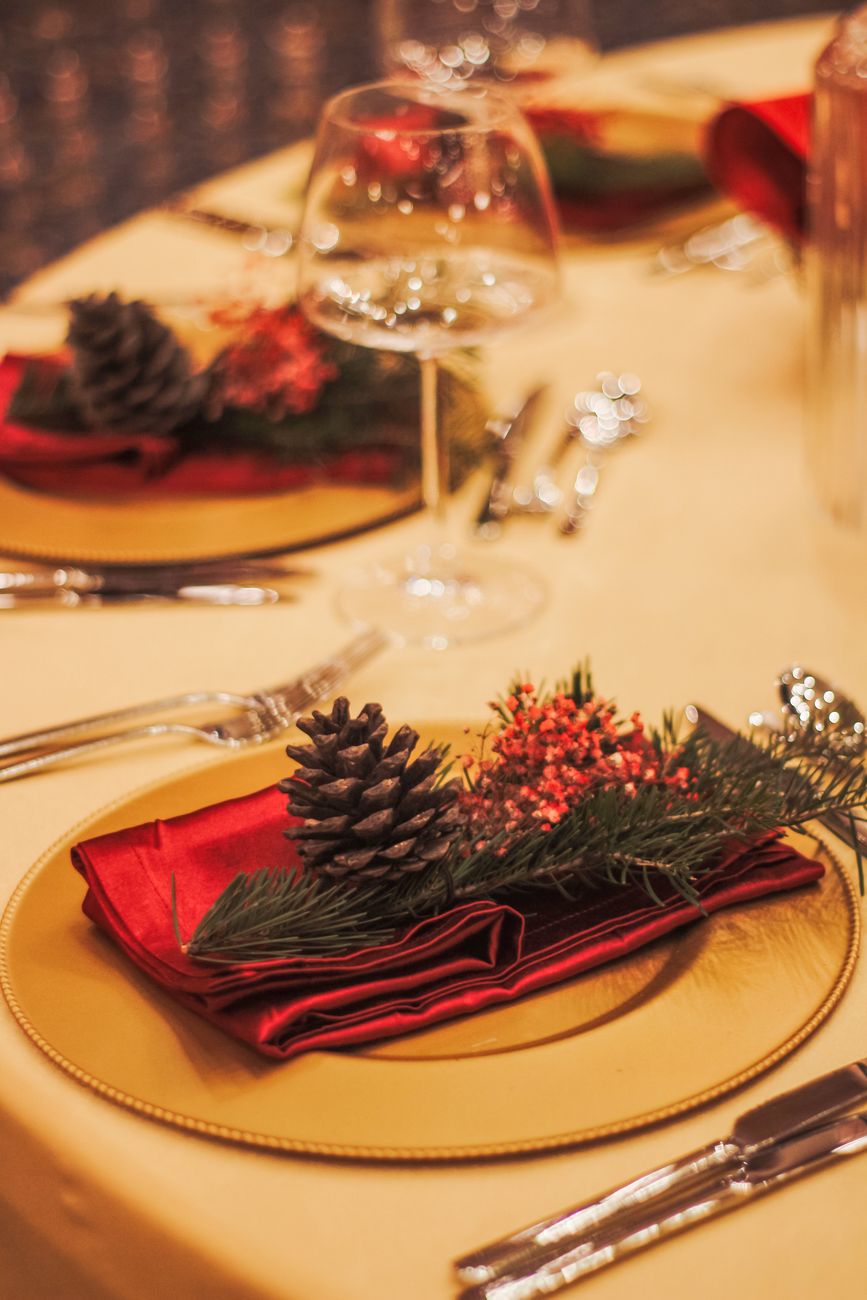
A vintage Christmas tablecloth — holly and berries on cream, or the deep red that hides every spill a season can produce — is the single biggest transformation available to a kitchen. It covers the everyday, softens the noise, and gives every tin and mug sitting on it a stage. Vintage-style cloths in those mid-century patterns are easy to find new, washable, and sized for real kitchen tables.
Vintage-style Christmas tablecloth
Under the cloth, keep the centerpiece working-class: a bowl of oranges and walnuts, a small candle, and whatever the kids made this year in the place of honor. The kitchen table centerpiece should be movable in five seconds, because that table has jobs to do.
Candlelight and Window Glow in the Kitchen
The last layer is light. A kitchen at Christmas should never be lit like a kitchen the rest of the year — overheads off when you can manage it, and small warm sources on instead.

How can I make a kitchen feel Christmassy without redecorating?
Change the light and the textiles, and you are most of the way there. Put a small lamp or a candle-style light on the counter, a candle in the window over the sink — the one passersby see — and let the under-cabinet glow do the rest. Warm, low light forgives every modern surface and makes laminate look like memory. It is the same layering trick I use in the living room: several small warm sources instead of one bright one, which I break down in my guide to nostalgic lighting pieces.
The window over the sink deserves its own sentence, because in house after house it held the same thing: one candle, or a small wreath, or the paper star. Whatever yours holds, make it the thing you light first each evening. A kitchen that glows from the driveway is a house that is clearly expecting people it loves.
Conclusion
A grandma’s Christmas kitchen was never decorated the way we decorate now. It was prepared — tins filled, towels hung, bowls ready, cocoa waiting — and the preparation itself turned out to be the prettiest thing in the house. That is wonderful news for the rest of us, because preparation is cheap, useful, and washes up in January into a single box.
Start with the tins. Add the good towels and one working corner of cocoa. Lay the tablecloth and light the window candle. Then bake something — because the fastest way to make a kitchen feel like the one you grew up in is to make it smell like it. For the rest of the house in the same spirit, keep going with the full nostalgic Christmas decor tour, and for timeless ideas that work in every season, my ultimate guide to timeless home aesthetics is the place to start.
FAQ
What makes a kitchen feel like a grandma’s Christmas kitchen?
Useful things, visibly loved. Cookie tins out on the counter, flour-sack towels on the oven door, a heavy mixing bowl, a tablecloth on the table, and something always baking or ready to serve. It is a working kitchen dressed for the season, not a showroom — the feeling comes from generosity and activity more than from any single decoration.
How can I get the vintage Christmas kitchen look on a small budget?
Start with textiles and tins, which are the cheapest and highest-impact pieces: one set of Christmas towels, one tablecloth, and a starter row of cookie tins can transform the room for less than a single statement decoration. Add one piece a year — a bowl, a canister set, the good mugs — the way grandmothers actually built these kitchens: gradually.
Which cookies keep best in tins?
Sturdy, low-moisture cookies are the tin champions: shortbread, gingerbread, snickerdoodles, spritz, and biscotti keep two to three weeks in a wax-paper-lined tin at room temperature. Keep crisp and soft cookies in separate tins, and keep strong flavors like peppermint apart, or everything in the tin will taste faintly of candy cane by the weekend.
How do I style open kitchen shelves for Christmas?
Swap, don’t add. Trade the everyday dishes on one shelf for the holiday mugs, stand the cookie cutters in a jar like utensils, lean a small wreath or a framed Christmas card against the back wall, and let a strand of greenery run along the shelf edge. Keeping the everyday things mostly in place is what makes it read as a real kitchen celebrating, not a display.
What colors belong in a nostalgic Christmas kitchen?
The classic four: deep red, evergreen, cream, and a little gold — the colors of the tins and tablecloths those kitchens already had. They arrive naturally on textiles and packaging, so you rarely need to buy “decor” in those colors at all; you just let the working pieces show.
Can a modern kitchen still feel like Grandma’s at Christmas?
Absolutely — the feeling lives in the layer, not the architecture. Warm low light instead of overheads, natural textiles, visible baking, and one glowing window will make stainless steel and stone feel like December in an evening. Grandma’s kitchen had whatever appliances her decade sold her, too. She just dressed them for the season.